+86-18053186595
+86-18053186595
HEBEI RONGCHANG WIRE MESH PRODUCT CO., LTD.
/
SUS 304 316 Single Layer SUS Filter Mesh Screen Discs

Custom Filter Mesh Disc – SS304/316/Brass/Copper | Rongchang Wiremesh

What Is a Filter Mesh Disc?

A filter mesh disc is a precision-cut circular or shaped filtration element manufactured from woven wire mesh, designed to remove solid particles from liquids, gases, or molten materials. These discs serve as the core filtration media in pipeline strainers, screen changers, filter presses, laboratory equipment, and industrial processing systems worldwide. By selecting the appropriate mesh count, wire diameter, material alloy, and edge treatment, engineers can achieve precise particle retention—from coarse debris straining at 1,000 microns down to sub-micron polishing for hydraulic fluids and pharmaceutical products.
At Rongchang Wiremesh, we manufacture custom filter mesh discs in a comprehensive range of materials including stainless steel 304, 316, 316L, brass, copper, phosphor bronze, nickel alloy, aluminum, and carbon steel. Each disc is engineered to your exact dimensional, material, and performance specifications, with options for single-layer simplicity or multi-layer graded filtration assemblies. Whether you need a standard 47mm laboratory disc or a 1,000mm diameter industrial strainer, our CNC precision manufacturing ensures consistent quality, tight tolerances, and reliable performance across every application.

Material Selection Guide for Filter Mesh Discs

Choosing the correct base material is the most critical decision in filter disc specification. The material must withstand the chemical composition of the process media, operate within the required temperature range, and meet any regulatory or industry standards. Our engineering team provides complimentary material compatibility assessments to ensure optimal selection.

Stainless Steel 304 & 316 Filter Discs

304 stainless steel filter discs represent the most widely specified option across general industrial applications. This austenitic grade offers excellent resistance to organic acids, oxidizing agents, atmospheric corrosion, and water-based media. With good mechanical strength and cost efficiency, SS304 discs are the standard choice for food processing, water treatment, plastic extrusion, and general air and liquid filtration where chloride exposure is minimal.
316 stainless steel filter discs incorporate 2–3% molybdenum, delivering superior resistance to pitting and crevice corrosion in chloride-rich, saline, or acidic environments. For offshore oil platforms, marine filtration systems, chemical reactors, and pharmaceutical processes involving aggressive solvents, 316 and 316L (low-carbon) grades are the industry benchmark. The 316L variant minimizes carbide precipitation during welding, making it essential for sanitary and high-purity applications. Both 304 and 316 discs can be electropolished or passivated to enhance surface cleanliness, reduce particle adhesion, and facilitate clean-in-place (CIP) protocols.

Brass, Copper & Bronze Filter Discs

Brass filter discs exhibit excellent machinability and good corrosion resistance in water and fuel systems, making them popular in automotive fuel filters, pneumatic systems, and musical instrument manufacturing. The copper-zinc alloy provides reliable performance at moderate temperatures and is easily formed into complex rim configurations.
Copper filter discs leverage the metal's natural antimicrobial properties and high thermal conductivity, making them ideal for steam filtration, HVAC systems, and certain food-contact applications where bacterial growth inhibition is beneficial. The material's ductility also allows for tight radius forming without cracking.
Phosphor bronze filter discs deliver exceptional wear resistance, fatigue strength, and spring properties. These characteristics make phosphor bronze the preferred choice for vibrating screens, shaker filters, and high-cyclic applications where repeated mechanical stress would degrade softer materials.

Nickel Alloy, Aluminum & Specialty Metals

For extreme process environments, nickel alloy 200/201 filter discs offer outstanding resistance to caustic alkalis and reducing chemicals. Inconel and Monel alloys tolerate high-temperature corrosive gases, seawater, and sulfuric acid environments where stainless steels would fail. Aluminum rimmed filter discs provide a lightweight, corrosion-resistant option for aerospace fuel filtration and weight-sensitive assemblies where every gram impacts performance. Galvanized steel and carbon steel discs are available for economical, short-life applications in dry, non-corrosive environments where material cost outweighs longevity concerns.
Our engineering team cross-references your process conditions—including media pH, chloride concentration, operating temperature, and pressure—against comprehensive material compatibility databases to recommend the optimal alloy for your specific application.


Products List

Rimmed vs Unrimmed Filter Discs: Which Do You Need?

Rimmed Filter Discs (With Frame)

Rimmed filter discs feature a solid metal edge band—typically stainless steel, brass, or copper—that is mechanically wrapped, spot welded, or soldered around the mesh perimeter. This edge treatment serves multiple critical functions:
  • 1.  Prevents Fraying: Unprotected mesh edges are prone to unraveling when cut, leading to wire fragments contaminating the filtrate and reduced service life. The rim locks every wire in place.
  • 2.  Ensures Sealing Integrity: The rim creates a flat, uniform sealing surface that mates precisely against gaskets, O-rings, and housing flanges, eliminating bypass flow that would allow unfiltered media to pass.
  • 3.  Increases Mechanical Strength: The reinforced edge enables the disc to withstand differential pressures, pulsating flows, and mechanical cleaning cycles that would deform unsupported mesh.
  • 4.  Facilitates Handling: The rigid rim allows operators to install and remove discs without damaging the active filtration area, reducing replacement time and contamination risk.
For industrial pipeline strainers, hydraulic systems, pharmaceutical processing, and any application where sealing integrity and operational safety are non-negotiable, rimmed discs are strongly recommended.

Unrimmed Filter Discs (Without Frame)

Unrimmed filter discs are precision-cut mesh blanks without peripheral reinforcement. These are ideal for:
  • 1.  Applications where the disc fits into an existing filter holder, support screen, or frame
  • 2.  Laboratory filtration using standard filter holders (e.g., 47mm Büchner funnels)
  • 3.  Low-pressure, low-stress environments where edge sealing is handled by the housing
  • 4.  Situations requiring maximum open filtration area with zero rim obstruction
  • 5.  Cost-sensitive applications where the housing provides sufficient edge support
Unrimmed discs offer lower cost and greater flexibility in custom shapes but require careful handling to prevent edge damage during installation.
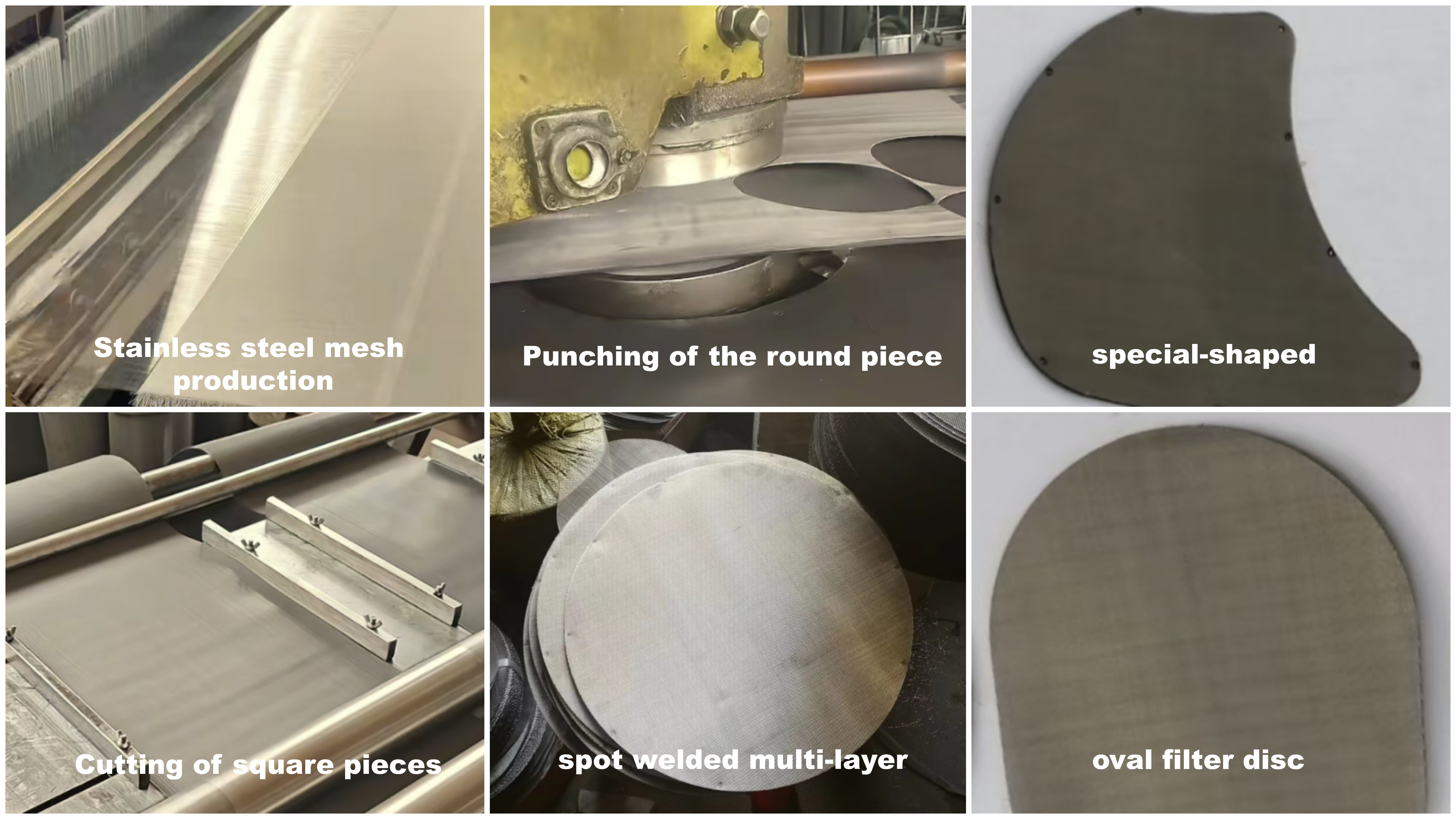
Mesh Filter Disc Production:
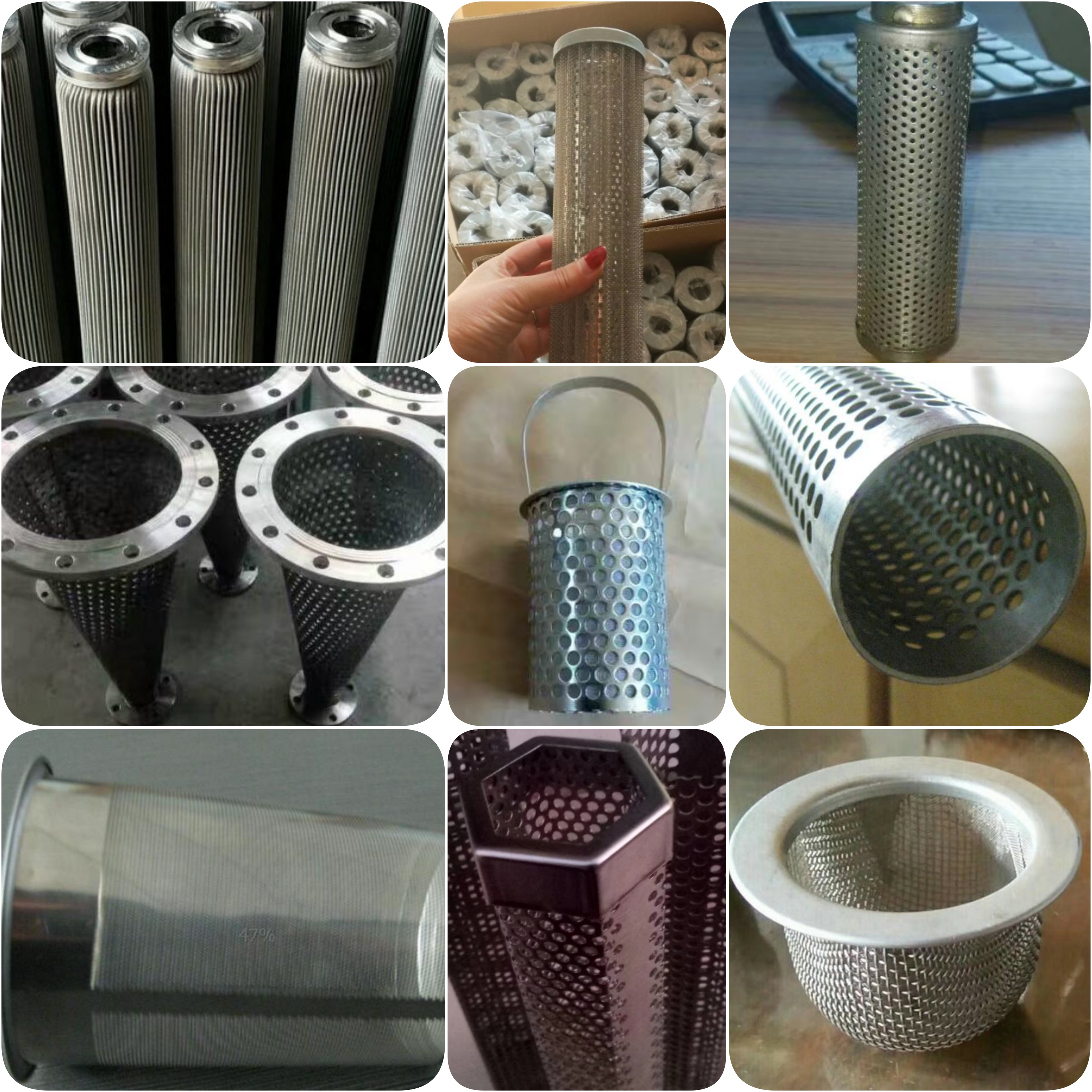
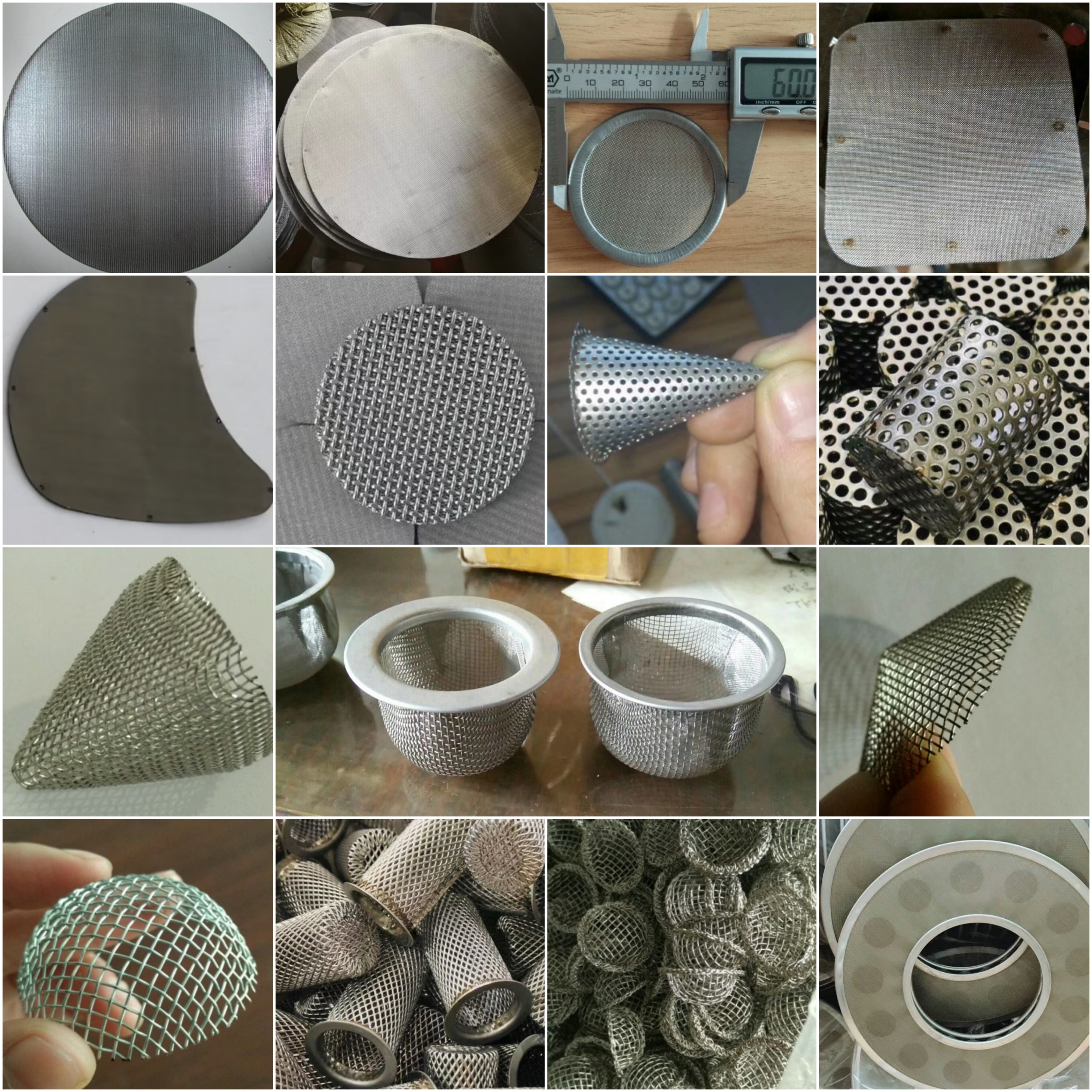
Our Wire Mesh Filter Products:
 Filter Mesh Disc
filter tube, filter cap

Layer Configurations: Single vs Multi-Layer Filter Discs

Single Layer Filter Discs

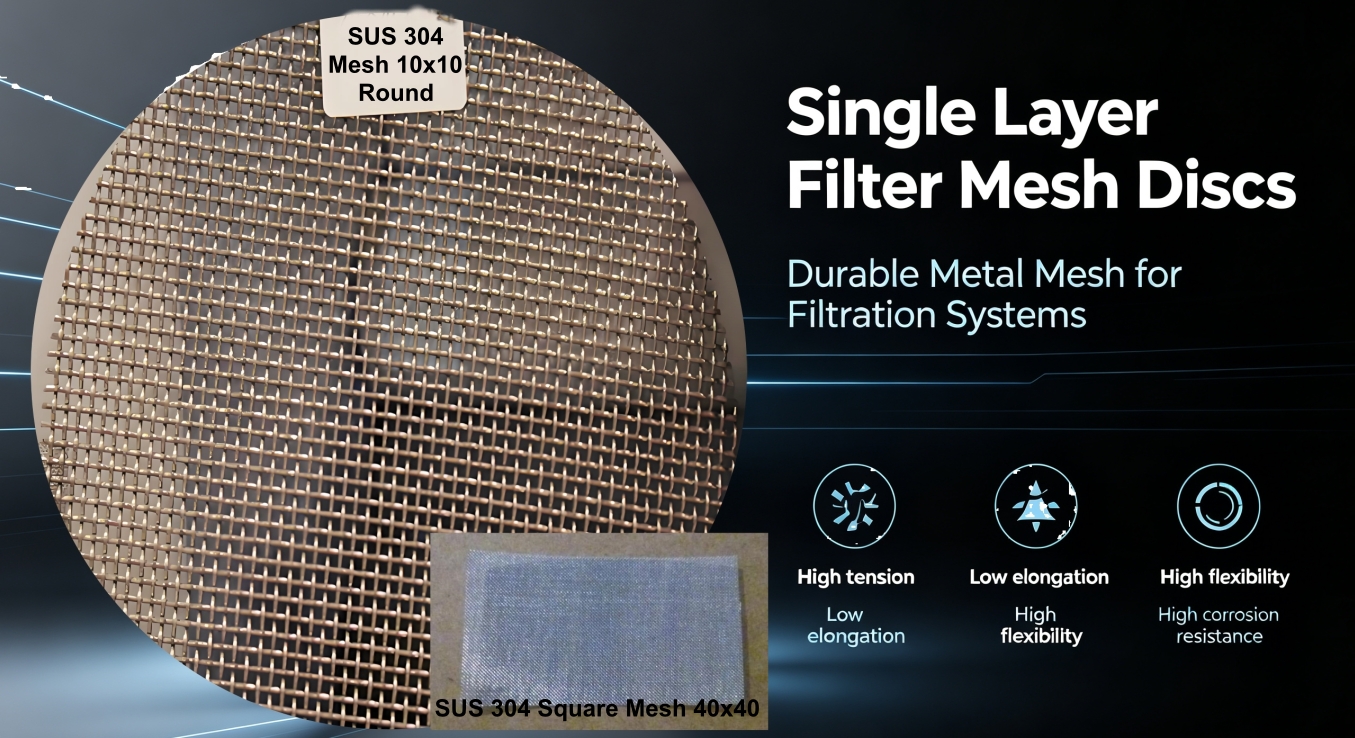
Single layer discs consist of one woven mesh sheet, either rimmed or unrimmed. This is the most economical configuration, offering:
  • 1.  High Open Area: Maximum flow rate with minimal pressure drop
  • 2.  Simple Cleaning: Easy backwashing, ultrasonic cleaning, or manual brushing
  • 3.  Quick Replacement: Low cost supports frequent change-out schedules
  • 4.  Transparent Performance: Single mesh count provides predictable, consistent filtration
Single layer discs are ideal for coarse filtration, protective screening, pre-filtration stages, and processes where frequent replacement is preferred over cleaning. They also serve as support screens beneath finer media in dual-stage or stacked assemblies.

Multi-Layer Spot Welded Filter Discs

Multi-layer spot welded discs combine two to five mesh layers of identical or differing micron ratings, joined by precision resistance welding at multiple points across the surface. This construction offers:
  • 1.  Graded Filtration: Coarse outer layers capture large contaminants while fine inner layers handle sub-micron particles, extending overall service life
  • 2.  Enhanced Dirt-Holding Capacity: Inter-layer channels trap particles without blinding the fine mesh surface
  • 3.  Structural Stability: Spot welding prevents delamination under pressure while maintaining permeability
  • 4.  Cost Efficiency: Extends change-out intervals compared to single-layer fine mesh
Typical configurations pair a coarse outer layer (200–400 micron) with a fine inner layer (25–80 micron), balancing protection and precision. Spot welded multi-layer discs are widely used in hydraulic oil filtration, polymer extrusion screen packs, and chemical processing.

Bound Edge Multi-Layer Discs

For maximum edge integrity and high differential pressure tolerance, bound edge multi-layer discs encase the entire laminated mesh stack within a solid metal rim. The rim is mechanically compressed and sealed around the mesh perimeter, creating a unified structure with no exposed layer edges. This construction is preferred in:
  • 1.  High-pressure hydraulic systems (up to 10,000+ psi)
  • 2.  Autoclave and sterilization-in-place (SIP) filtration
  • 3.  Sanitary processing where media bypass must be eliminated entirely
  • 4.  Applications involving pulsating flows or mechanical cleaning scrapers

Weave Types & Filtration Performance

Plain Weave Filter Discs

Plain weave is the most common pattern, with each warp wire passing alternately over and under each weft wire. This creates uniform square apertures with consistent opening sizes, making plain weave ideal for general-purpose filtration where predictable particle retention is required. Plain weave discs offer high open area and low flow resistance, suitable for air, gas, and low-viscosity liquid filtration. The symmetrical structure also provides equal strength in both warp and weft directions.

Twill Weave Filter Discs

In twill weave, each warp wire passes over two weft wires and under one (or similar variations), creating a diagonal rib pattern. This structure allows heavier wire diameters at equivalent mesh counts, producing a stronger, more durable screen with slightly reduced open area. Twill weave discs tolerate higher mechanical stress, resist wire migration under vibration, and are preferred for vibrating screens, shaker filters, and applications where the disc is subject to pulsating loads or cleaning scrapers.

Dutch Weave Filter Discs

Dutch weave employs thicker warp wires and thinner weft wires in a tight packing arrangement, creating a triangular or trapezoidal pore structure that is not visible as a standard "mesh" opening. This pattern delivers very high particle retention at elevated flow rates, with filtration ratings extending into the sub-25 micron range. Dutch weave filter discs are essential for hydraulic fluid polishing, polymer melt filtration, and fine chemical separation where absolute particle control is critical. Because Dutch weave mesh is less permeable than square weave, disc sizing must account for the higher pressure drop across the media.
 Filter Mesh Disc

Filtration Ratings & Micron Specifications

Our filter mesh discs are available across a broad spectrum of filtration ratings, precisely calibrated to international mesh standards (ASTM E11, ISO 3310, Tyler, or DIN 4195). The filtration range extends from 12 microns for fine hydraulic and pharmaceutical filtration up to 1,000 microns for coarse debris straining and pre-filtration.


Filtration RatingTypical Mesh CountCommon Applications
12–25 microns500–635 meshHydraulic oil polishing, fine chemical filtration, pharmaceutical sterile processing
40–80 microns200–400 meshFuel filtration, pneumatic systems, paint straining, ink filtration
100–200 microns80–150 meshWater treatment intake screens, process fluid pre-filtration, coolant systems
250–400 microns40–60 meshPlastic extrusion, polymer melt filtration, slurry dewatering
500–1,000 microns18–30 meshLarge-particle straining, pump protection, agricultural irrigation, debris screening
Each rating corresponds to a specific mesh count and wire diameter combination. Our technical team provides certified filtration test data, bubble point test reports, and particle retention efficiency curves upon request.


Industrial Applications & Use Cases

Oil & Gas Filtration

In upstream extraction, midstream transport, and downstream refining, stainless steel 316 filter discs protect pumps, meters, control valves, and compressors from sand, scale, rust, and pipeline debris. Multi-layer spot welded discs handle high differential pressures in subsea wellhead applications, while Dutch weave discs polish produced water and injection fluids to prevent formation damage in enhanced oil recovery operations.

Chemical & Pharmaceutical Processing

Chemical reactors and pharmaceutical manufacturing require filtration media that tolerate aggressive solvents, high temperatures, and strict cleanliness standards. Passivated 316L stainless steel discs and nickel alloy discs provide the chemical inertness and surface purity needed for active pharmaceutical ingredient (API) filtration, catalyst recovery, and solvent purification. Bound edge multi-layer discs ensure zero bypass in batch processes where cross-contamination risks are unacceptable.

Food & Beverage Filtration

FDA-compliant 304 and 316 stainless steel filter discs are integral to dairy processing, brewery filtration, edible oil refining, sugar syrup clarification, and beverage production. Electropolished surfaces meet 3-A sanitary design standards, and the open mesh architecture facilitates clean-in-place (CIP) protocols using caustic, acidic, and oxidative cleaning agents without mesh degradation.

Water Treatment & Environmental

Municipal and industrial water treatment systems employ large-diameter filter discs in strainer baskets, self-cleaning filters, reverse osmosis pre-treatment skids, and wastewater recycling plants. The reinforced rim prevents mesh pull-out under high-flow conditions, while multi-layer configurations extend maintenance intervals in raw water intake applications subject to algae, sediment, and debris loading.

Automotive & Aerospace

Brass and stainless steel filter discs regulate contamination in fuel injection systems, lubrication circuits, hydraulic actuators, and coolant loops. Lightweight aluminum discs serve aerospace fuel and coolant filtration, where every gram impacts fuel efficiency and corrosion resistance is mandatory for long service intervals.

Plastic & Polymer Extrusion

SS304 and SS316 filter discs are installed in extruder screen changers and die heads to remove contaminants, degraded polymer, and unmelted pellets from molten plastic streams. Multi-layer configurations with coarse-to-fine grading extend screen pack life from minutes to hours, minimizing production downtime in continuous extrusion processes.

Manufacturing Process & Quality Assurance

Our filter mesh disc production follows a rigorous, documented workflow from raw material verification to final inspection and shipment.

Raw Material Verification

All wire mesh is sourced from certified mills with full traceability. Incoming material is inspected for alloy composition (via XRF spectroscopy), wire diameter, mesh count accuracy, and tensile strength. Non-conforming material is rejected before entering production.

Precision Cutting & Edge Preparation

Wire mesh is tension-leveled to remove curl and distortion, then cut using CNC die-cutting, fiber laser cutting, or waterjet cutting depending on material thickness, shape complexity, and volume. Blanks are deburred, cleaned, and 100% inspected for dimensional accuracy, edge quality, and absence of defects before rimming or layer assembly.

Rim Binding & Spot Welding

For rimmed discs, the rim is formed from strip metal matching or complementing the mesh alloy. Bound edge discs undergo mechanical compression and sealing to create a leak-free perimeter. For spot welded multi-layer discs, layers are aligned under optical magnification and resistance-welded at programmed intervals to ensure uniform bonding without thermal distortion of mesh pores.

Surface Treatment & Final Inspection

Discs undergo ultrasonic cleaning in deionized water to remove oils, particulates, and manufacturing residues. Optional passivation restores the corrosion-resistant chromium oxide layer on stainless steel. Electropolishing is available for sanitary and pharmaceutical grades, achieving surface roughness (Ra) values below 0.4 microns. Final inspection verifies rim concentricity, mesh flatness, filtration rating consistency, and absence of defects using digital microscopy and optical comparators.

Documentation & Certification

Every order ships with material test reports (MTR), dimensional inspection reports, and certificates of conformance. Optional certifications include FDA material safety data sheets, RoHS compliance statements, ISO 9001 quality certificates, and third-party inspection reports from SGS, Bureau Veritas, or TÜV.


Technical Specifications

AttributeSpecification RangeNotes
Materials304, 316, 316L SS; brass; copper; bronze; nickel alloy; aluminum; galvanized steel; carbon steelHastelloy, titanium, duplex 2205 on request
Disc TypeRimmed (with frame) / Unrimmed (without frame)Rim widths: 2–20 mm typical
ShapesCircular, toroidal, square, rectangular, kidney, oval, customCAD-based custom tooling; no tooling charge for standard die sets
Layer ConstructionSingle layer; multi-layer spot welded; bound edge multi-layerUp to 5+ layers for specialized applications
Weave TypesPlain weave, twill weave, Dutch weaveHybrid and special weaves available
Filtration Rating12 – 1,000 micronsAbsolute and nominal ratings per ASTM/ISO standards
Disc Diameter5 mm – 1,000+ mmLarger diameters via segmented or welded construction
Wire Diameter0.02 mm – 1.0 mmDependent on mesh count and material
Thickness0.1 mm – 3.0 mmIncreases with layer count and wire diameter
Cutting Tolerance±0.1 mm (laser) / ±0.2 mm (die-cut)Critical dimensions verified per drawing
Surface FinishMill finish, passivated, electropolishedRa ≤ 0.4 μm available for electropolish
Operating Temperature-196°C to 1,100°CMaterial-dependent; SS304 rated to 800°C
Operating PressureUp to 10 MPa (1,450 psi)Higher ratings with reinforced rim designs
CertificationISO 9001, FDA, RoHS, CEThird-party inspection (SGS, BV, TÜV) optional
MOQ10 pieces (standard); 1 piece (sample)Volume discounts for 1,000+ piece orders
Lead Time7–20 business daysExpedited production and air freight available

Why Choose Rongchang Wiremesh Filter Discs?

  • Comprehensive Material Range: Nine standard alloys plus specialty metals, with full mill certification and traceability.
  • Precision Manufacturing: CNC laser cutting, die cutting, and waterjet cutting ensure ±0.1mm tolerance on critical dimensions.
  • Custom Engineering Support: No minimum order for standard designs; rapid prototyping for new geometries; free material compatibility consultation.
  • Multi-Industry Experience: Decades of supply to oil and gas, pharmaceutical, food and beverage, chemical, automotive, and water treatment sectors.
  • Global Compliance: Materials and finishes available to meet FDA, ISO 9001, ATEX, CE, and customer-specific quality standards.
  • Competitive Lead Times: Standard discs ship within 7–14 days; custom designs within 14–21 days; rush orders accommodated.
  • Quality Guarantee: Full replacement policy for any disc failing to meet agreed specifications, including shipping costs.

Frequently Asked Questions

What is the difference between rimmed and unrimmed filter discs?

Rimmed filter discs feature a solid metal edge band that prevents mesh fraying, provides a flat sealing surface, and increases mechanical strength. Unrimmed discs are simply cut mesh blanks, suitable for low-stress applications where edge sealing is handled by the housing or where maximum open area is required. For industrial pipeline and housing installations, rimmed discs are strongly recommended.

What filtration ratings are available?

We offer filtration ratings from 12 microns (fine hydraulic/polishing grade) to 1,000 microns (coarse straining grade). Intermediate ratings such as 25, 40, 80, 100, 150, 200, 400, and 500 microns are standard stock options. Custom ratings can be engineered by adjusting mesh count and wire diameter to meet specific particle retention requirements.

Can I order custom shapes and sizes?

Yes. Beyond standard circles, we manufacture toroidal, square, rectangular, kidney, oval, and fully custom shapes from your CAD drawings, DXF files, or physical samples. There is no tooling charge for shapes that can be produced from existing die sets. Custom laser-cut shapes are available for prototypes and low-volume orders.

Which material is best for my application?

For general industrial and water treatment, SS304 is the most cost-effective choice. For chloride-rich, marine, or acidic environments, SS316 or 316L is recommended. For fuel filtration and moderate corrosion resistance, brass is suitable. For extreme temperatures or highly corrosive chemicals, nickel alloys (Inconel, Monel) may be required. Contact our engineering team with your specific media composition, temperature, and pressure for a detailed compatibility assessment.

What is the difference between spot welded and bound multi-layer discs?

Spot welded multi-layer discs are joined at discrete weld points across the surface, offering good layer retention with maintained permeability and lower cost. Bound edge multi-layer discs are sealed within a continuous rim, providing maximum edge integrity, zero bypass, and superior pressure resistance. Choose spot welded for moderate pressure and cost efficiency; choose bound edge for high-pressure, sanitary, or critical applications.

How do I clean and reuse filter mesh discs?

Stainless steel and brass filter discs can be cleaned and reused multiple times. Recommended methods include backwashing with clean water or solvent, ultrasonic cleaning in appropriate detergent, gentle brushing with a soft nylon brush, or immersion in caustic or acidic cleaning solutions (for chemically compatible materials). Avoid abrasive scrubbing that could damage mesh wires. Inspect discs after cleaning for wire breakage, rim separation, or mesh distortion before reuse.

What is the typical lead time?

Standard filter mesh discs in common materials and sizes ship within 7–14 business days. Custom shapes, multi-layer assemblies, specialty alloys, or electropolished finishes typically require 14–21 business days. Rush orders, air freight, and split shipments can be arranged for urgent maintenance shutdowns or prototype validation schedules.

Do you provide samples for testing?

Yes. We offer prototype samples starting from a single piece for material and performance validation. Sample lead time is typically 3–5 business days for standard materials and shapes. Sample costs are credited against your first production order.

Request a Quote for Custom Filter Mesh Discs

Specify your ideal filter mesh disc today. Provide your required material, shape, diameter, filtration rating, layer configuration, rim type, and quantity, and our filtration engineers will respond within 24 hours with a detailed quotation, technical drawing, and lead time estimate. Whether you need a single prototype for lab testing or a high-volume production run for continuous manufacturing, we deliver precision filtration solutions engineered for your process.
Contact us now to discuss your industrial filtration requirements with a wire mesh specialist.
SUS 304 316 Single Layer SUS Filter Mesh Screen Discs
Related Products
Explore our complete range of deep-processed wire mesh products
Ready to Get Your Custom Filter Mesh Discs?
Send us your specifications, drawings, or application requirements in the botton table or call us with the floating button on the right. Our engineering team will respond with a detailed quotation within 24 hours.
QUICK LINKS
CONTACT US
No.169, Yuhua East Road, Yuhua District, Shijiazhuang City, China
FOLLOW US ON
+86-18053186595
+86-18053186595
HEBEI RONGCHANG
WIRE MESH PRODUCT CO., LTD.
Powerby Feedback Follow Data