-
Mobile Version
Scan with Mobile
- Member Center


Selecting the correct stainless steel grade is critical to basket longevity and regulatory compliance. We offer three primary grades, each suited to different operational demands.
Grade 304 is the most widely used austenitic stainless steel for wire mesh baskets. With 18% chromium and 8% nickel, it forms a robust passive oxide layer that resists oxidation, organic acids, and water-based corrosion. For applications in commercial kitchens, light industrial storage, standard laboratory organization, and non-sterile parts handling, 304 offers an outstanding balance of performance and cost efficiency.
Key characteristics of 304 stainless steel baskets include resistance to food acids and cleaning detergents, good formability for complex shapes, and a maximum continuous service temperature of approximately 800°C (1,472°F). While 304 performs admirably in most indoor and controlled environments, it is not recommended for prolonged exposure to chloride-rich environments such as marine atmospheres or aggressive medical sterilization chemicals without additional surface treatment.
Grade 316 stainless steel elevates performance through the addition of 2–3% molybdenum. This alloying element dramatically improves resistance to pitting, crevice corrosion, and attack from chlorides, salts, and industrial solvents. For medical sterilization departments, marine applications, chemical processing facilities, and pharmaceutical manufacturing, 316 is the material of choice.
316 stainless steel baskets tolerate repeated autoclave cycles, ultrasonic cleaning with alkaline detergents, and immersion in disinfectant solutions without degradation. With a maximum service temperature of roughly 870°C (1,598°F), these baskets maintain structural stability through the most rigorous sterilization protocols. If your operation involves regular contact with bleach, saline, or acidic cleaning agents, 316 provides the longevity that 304 cannot match.
316L is the low-carbon variant of 316, containing less than 0.03% carbon. This reduction minimizes chromium carbide precipitation during welding, eliminating intergranular corrosion risks at weld joints and heat-affected zones. For custom baskets requiring extensive welding, intricate frame assemblies, or FDA-compliant food and medical contact surfaces, 316L is the superior specification.
All three grades are available with full mill test reports (MTRs), material certifications, and compliance documentation for FDA, ISO, and CE-marked equipment upon request.
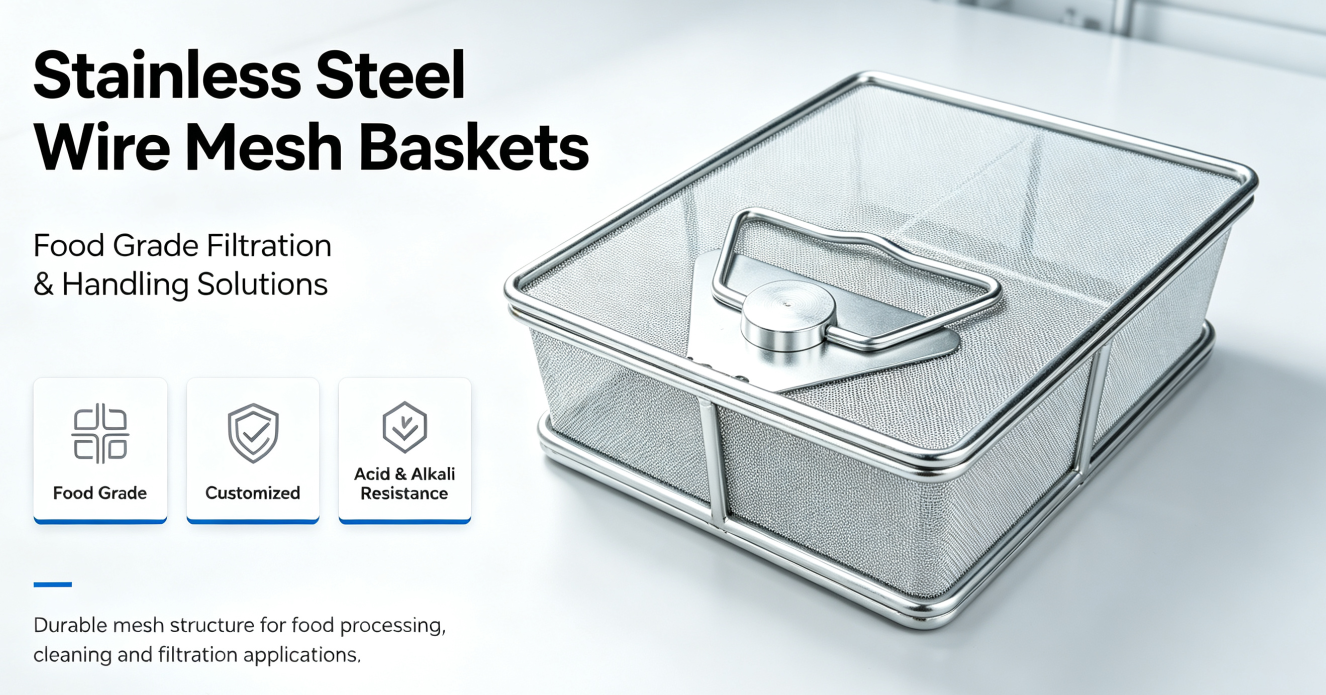
When hygiene, durability, and precision matter, stainless steel wire mesh storage baskets are the industry standard. Manufactured from premium-grade 304, 316, and 316L stainless steel, our multi-purpose storage baskets deliver exceptional corrosion resistance, antibacterial properties, and structural integrity for the most demanding environments. Whether you need a sterilization basket for hospital autoclaves, a containment solution for laboratory glassware, or a heavy-duty parts washer for industrial lines, we engineer every basket to your exact specifications.
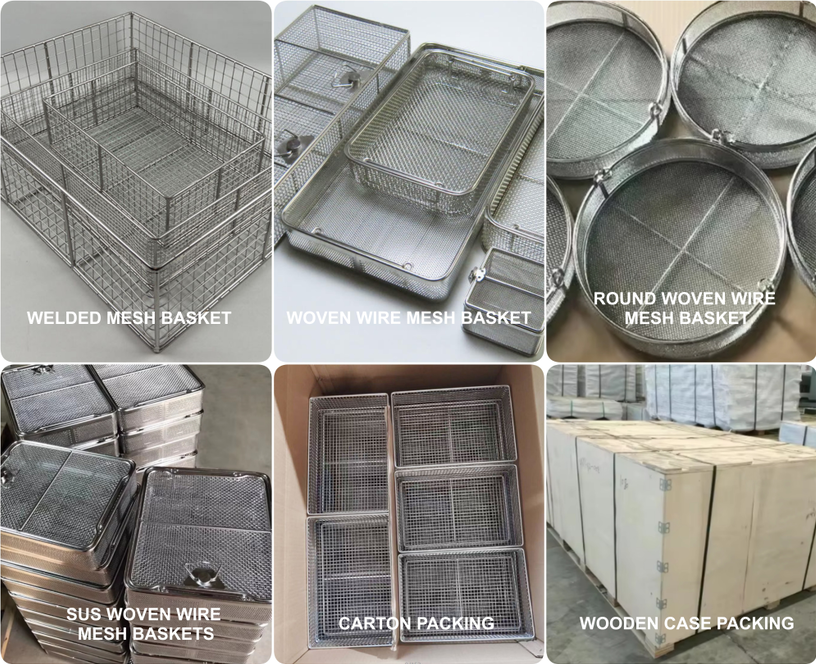
A stainless steel wire mesh storage basket is a rigid, open-structure container built from woven or welded wire mesh, reinforced with stainless steel frames and finished with precision edge treatments. Unlike plastic or coated metal alternatives, stainless steel baskets offer inherent antimicrobial properties, will not shed particles, and withstand repeated exposure to high temperatures, aggressive chemicals, and mechanical stress.
Our multi-purpose baskets bridge the gap between storage and process equipment. They are not passive containers — they are engineered tools designed to facilitate washing, draining, drying, sterilizing, transporting, and organizing items across medical, laboratory, food processing, and manufacturing sectors. Every basket is built with zero burrs, zero sharp edges, and a surface finish optimized for your specific application.
No two operations are identical, and off-the-shelf baskets often force compromises in efficiency, capacity, or compatibility. We manufacture fully custom stainless steel wire mesh baskets with no minimum order quantity for standard designs. Send us your dimensional drawings, describe your application, or collaborate with our engineering team to optimize a design from scratch.
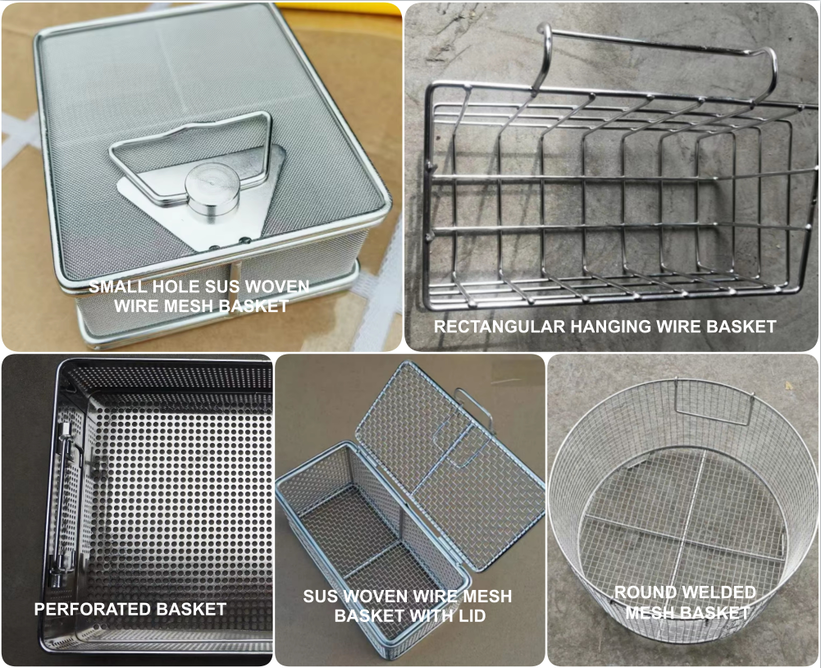
We produce baskets in virtually any three-dimensional geometry. Common configurations include rectangular trays for instrument sterilization, cylindrical baskets for tank immersion and centrifugal drying, conical designs for funneling and draining, and divided compartment baskets for organizing small parts or surgical kits. Maximum single-piece dimensions extend to 2,000 mm × 1,000 mm × 800 mm; larger assemblies can be fabricated in sections with bolt-together or welded joints.
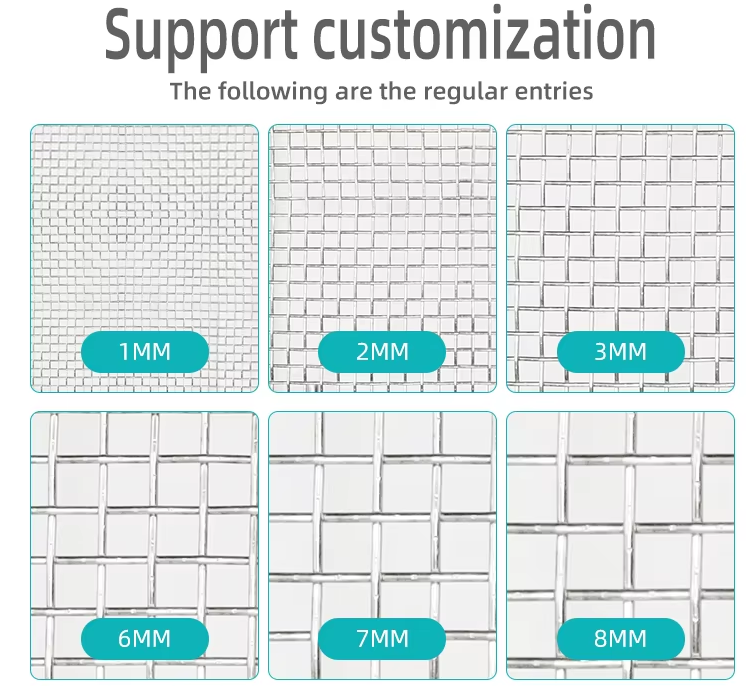
Mesh selection determines filtration efficiency, drainage speed, structural load capacity, and visibility. We offer woven wire mesh with openings ranging from micro-filtration grades (as fine as 20 microns) to heavy-duty structural grids with 50 mm+ apertures. Wire diameters span from delicate 0.5 mm wires for lightweight laboratory use to robust 6.0 mm wires for industrial parts washing and material handling.
Mesh patterns include square weave, dutch weave, plain weave, and twill weave. For high-load applications, welded wire mesh with rigid intersections provides superior dimensional stability. Our engineers will recommend the optimal mesh-to-frame ratio based on your load requirements, fluid flow needs, and content size.
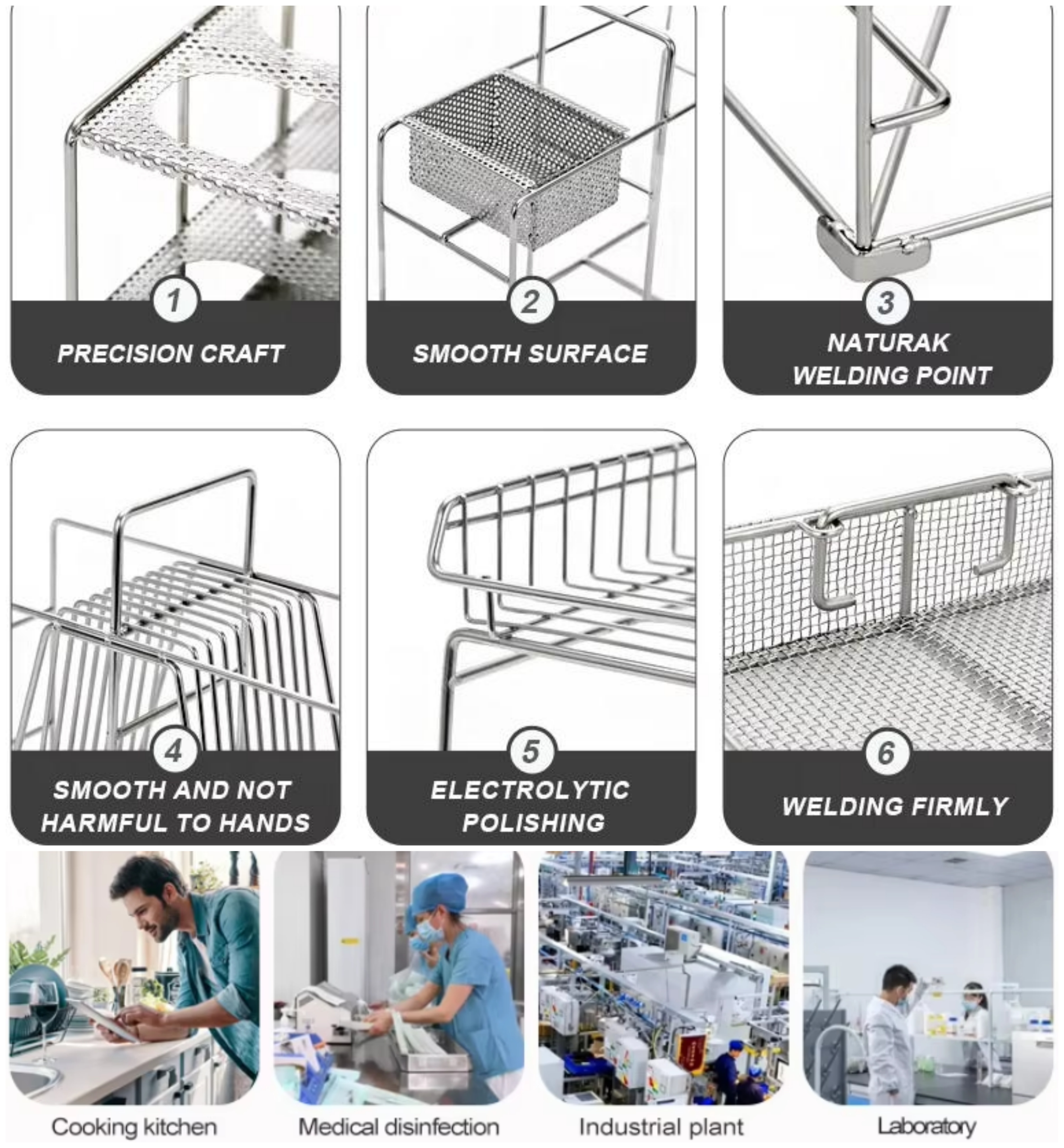
Frame integrity and edge safety are non-negotiable. We offer wrapped wire rims for economy designs, fully welded tubular frames for heavy loads, and reinforced boxed edges for baskets subject to repeated lifting and stacking. Every edge undergoes mechanical deburring and, where specified, electropolishing to create a smooth, passive surface free of mechanical defects that could harbor bacteria or damage contents.
Enhance utility and workflow integration with purpose-built add-ons:
Our production facility combines automated wire forming, precision resistance welding, and manual finishing to produce baskets that meet both commercial and critical-use standards.
Wire is CNC-formed to exact dimensional tolerances (typically ±1.0 mm on critical dimensions). Frames are assembled using automated resistance welding for consistent heat input and joint penetration. For 316L grades, we employ pulsed TIG welding with argon shielding to preserve corrosion resistance in weld zones. Post-weld, every joint is visually inspected and mechanically tested for pull strength.
Raw stainless steel contains free iron and surface contaminants from manufacturing. We offer two levels of surface refinement:
Every basket undergoes tactile and visual inspection to ensure zero burrs, zero sharp points, and zero surface defects. This commitment to safety finishing protects users from lacerations, prevents damage to delicate medical instruments and glassware, and eliminates contamination risks from metal particles. Surface roughness (Ra) values are available upon request for electropolished finishes.
Stainless steel 304/316 multi-purpose storage baskets serve as essential infrastructure across diverse professional sectors.
In central sterile supply departments (CSSD) and operating theaters, our baskets organize surgical instruments, endoscopes, and implant trays during steam autoclave, ethylene oxide (EtO), and hydrogen peroxide plasma sterilization cycles. The open mesh architecture ensures saturated steam penetration and rapid drying, while 316/316L construction withstands thousands of sterilization cycles without pitting or discoloration.
Research laboratories and biochemical units rely on our baskets for washing and draining glassware, transporting sample vials, and storing pipettes and petri dishes. Chemical resistance to ethanol, acetone, bleach, and autoclave detergents ensures basket longevity, while fine mesh options prevent loss of small components.
FDA-compliant 304 and 316 baskets are integral to HACCP-aligned operations. Applications include washing and draining fresh produce, deep-fryer chip baskets, utensil sterilization sinks, and ingredient storage in refrigerated environments. The non-reactive surface will not impart flavors, and open construction promotes rapid air-drying to prevent microbial growth.
Heavy-duty welded baskets handle metal components through ultrasonic cleaning tanks, spray washers, degreasing lines, and phosphate coating baths. Industrial-grade wire thickness and reinforced frames accommodate loads exceeding 50 kg per basket, while chemical-resistant 316 steel tolerates alkaline and solvent-based cleaners.
| Attribute | Specification Range | Notes |
|---|---|---|
| Material Grades | 304, 316, 316L | Other grades (321, 310S) available on request |
| Wire Diameter | 0.5 mm – 6.0 mm | Custom sizes outside range negotiable |
| Mesh Opening | 20 microns – 50+ mm | Woven or welded mesh options |
| Maximum Dimensions | Up to 2,000 × 1,000 × 800 mm | Larger sizes via sectional construction |
| Surface Finish | Passivated / Electropolished / Matte | Ra values available for electropolish |
| Operating Temperature | Up to 870°C (316 grade) | Varies by grade and load condition |
| Load Capacity | Up to 50+ kg per basket | Higher capacities with reinforced frames |
| Regulatory Compliance | FDA, ISO, CE documentation | Material certificates (MTR) provided |
The primary distinction is molybdenum content. 316 contains 2–3% molybdenum, which provides superior resistance to chlorides, salts, and aggressive chemicals. For general kitchen or light industrial use, 304 is sufficient and more economical. For medical sterilization, marine environments, or chemical exposure, 316 or 316L is strongly recommended.
Absolutely. Our 316 and 316L stainless steel sterilization baskets are specifically engineered to withstand standard autoclave conditions — typically 121°C at 15 psi (1 bar) saturated steam — as well as prevacuum and gravity-displacement cycles. The open mesh design ensures complete steam penetration and rapid post-cycle drying.
Yes. We encourage clients to validate design, fit, and function through prototype orders. Sample lead times are typically 5–7 business days for standard mesh and frame combinations. Prototypes are produced using the same materials and processes as production runs, ensuring representative evaluation.
Standard custom designs ship within 2–4 weeks from drawing approval. Large-volume orders, complex multi-compartment designs, or specialized surface finishes may extend to 4–6 weeks. Rush production and air freight options are available for time-critical medical or industrial deployments.
Yes. Send us your existing basket, technical drawing, or even detailed photographs with dimensions. Our engineering team can reverse-engineer the design, identify the material grade, and reproduce or improve upon the original with full manufacturing documentation.
Ready to specify your stainless steel 304/316 multi-purpose storage basket? Share your requirements — dimensions, material grade, mesh specification, accessories, and quantity — and our team will return a detailed quotation within 24 hours. Whether you need a single laboratory tray or a thousand industrial parts baskets, we deliver precision-engineered solutions that perform.
Contact us now to discuss your project with a wire mesh basket specialist.







Long Press to Scan QR Code
Scan QR Code
