-
Mobile Version
Scan with Mobile
- Member Center


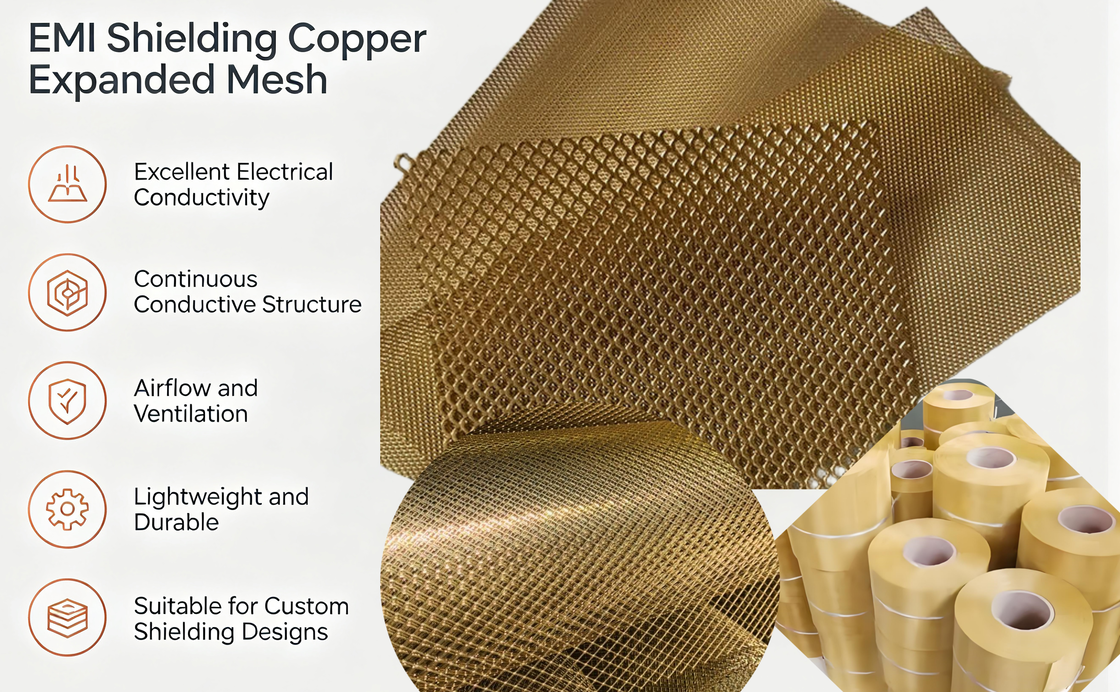
Our EMI shielding copper expanded mesh is manufactured from high-conductivity copper sheet that is slit and expanded into a uniform, continuous mesh structure. It provides an effective conductive path for electromagnetic interference (EMI) and radio-frequency interference (RFI) shielding while allowing airflow, light transmission, and pressure equalization.
Designed for use in electronic equipment, industrial enclosures, ventilation panels, grounding systems, and shielding assemblies, copper expanded mesh can be supplied in a wide range of mesh openings, strand sizes, sheet thicknesses, and dimensions to meet specific shielding and installation requirements.
Request a Quote | Download Technical Data | Contact Our Engineers
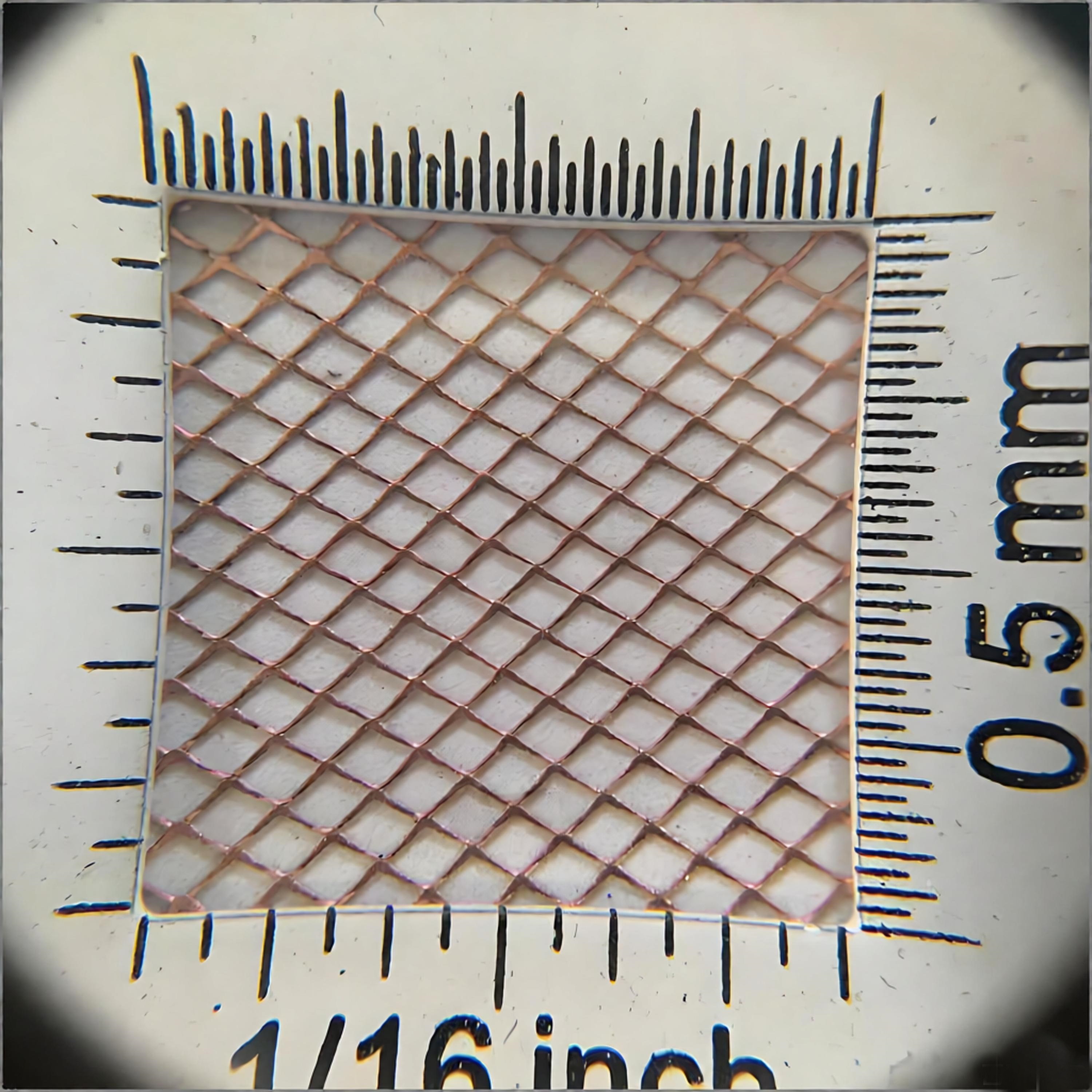
EMI shielding copper expanded mesh is a lightweight, conductive metal mesh produced by simultaneously slitting and stretching copper sheet. Unlike woven mesh, expanded metal mesh is made from one continuous piece of material without welded joints or loose wires.
This continuous construction provides:
Copper is widely used for electromagnetic shielding because of its high electrical conductivity and natural resistance to corrosion in many indoor and controlled environments. The mesh can be installed as a shielding layer, ventilation panel, grounding component, or conductive contact surface.
Copper offers high electrical conductivity, helping create a low-resistance path for unwanted electromagnetic energy. Proper bonding and grounding are essential to achieving effective shielding performance.
The expanded mesh is formed from a single sheet, which helps maintain electrical continuity across the mesh and reduces the risk of separated or disconnected wires.
Open mesh areas allow air to pass through, making the product suitable for EMI-shielded ventilation openings, cooling systems, electronic cabinets, and equipment enclosures.
The expanded structure reduces material weight while maintaining useful rigidity and mechanical strength. It can be cut, bent, rolled, or formed to suit different applications.
Mesh dimensions can be selected according to shielding frequency, airflow, optical requirements, mechanical strength, and installation conditions.
Copper expanded mesh can be supplied in sheets, rolls, strips, or fabricated components. It can be trimmed, punched, bent, laminated, or combined with frames and gaskets.
Our engineering team can help select the appropriate material thickness, opening size, mesh direction, and surface finish for your application.
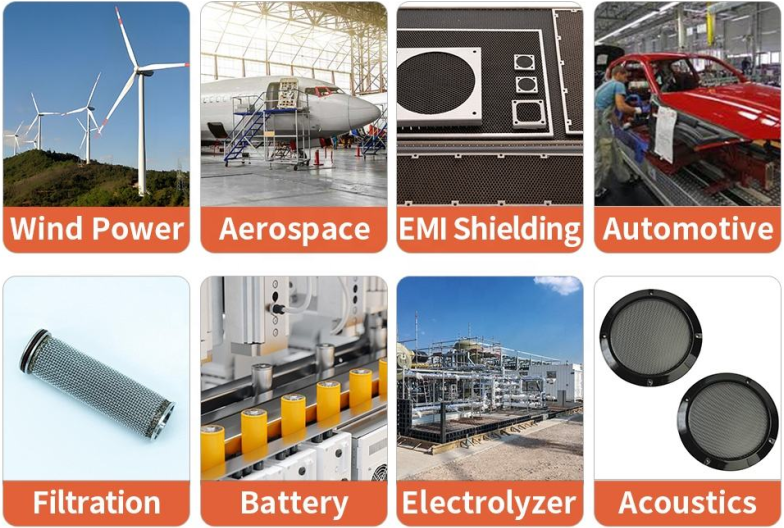
EMI shielding copper expanded mesh is used in a variety of electronic, industrial, telecommunications, and energy-related applications.
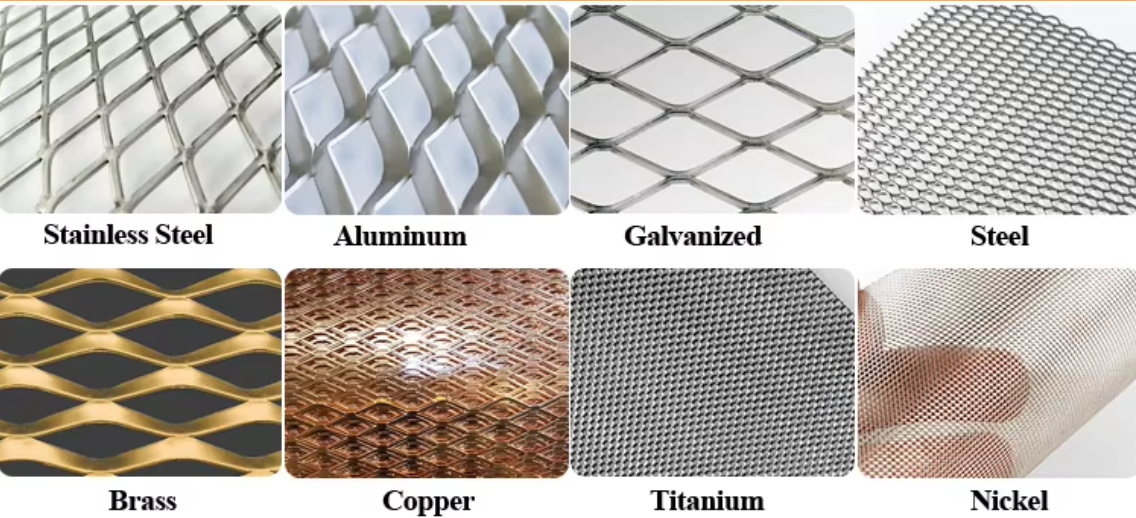
We offer copper expanded mesh in different material grades, dimensions, and configurations to meet application-specific requirements.
Depending on your electrical, mechanical, and environmental requirements, available options may include:
The exact material grade should be selected based on conductivity, strength, corrosion resistance, solderability, temperature, and operating environment.
The following specifications can be customized according to your design requirements.
| Item | Available Options |
|---|---|
| Product Type | EMI shielding copper expanded mesh |
| Material | Copper, copper alloy, plated copper |
| Mesh Style | Raised or flattened expanded mesh |
| Sheet Thickness | Customizable |
| Short Way of Diamond (SWD) | Customizable |
| Long Way of Diamond (LWD) | Customizable |
| Strand Width | Customizable |
| Strand Thickness | Customizable |
| Open Area | Customizable |
| Mesh Width | Standard or customized |
| Mesh Length | Standard or customized |
| Surface Finish | Bare copper, tin-plated, nickel-plated, or other finishes |
| Supply Form | Sheet, roll, strip, panel, or fabricated part |
| Processing | Cutting, forming, punching, framing, laminating |
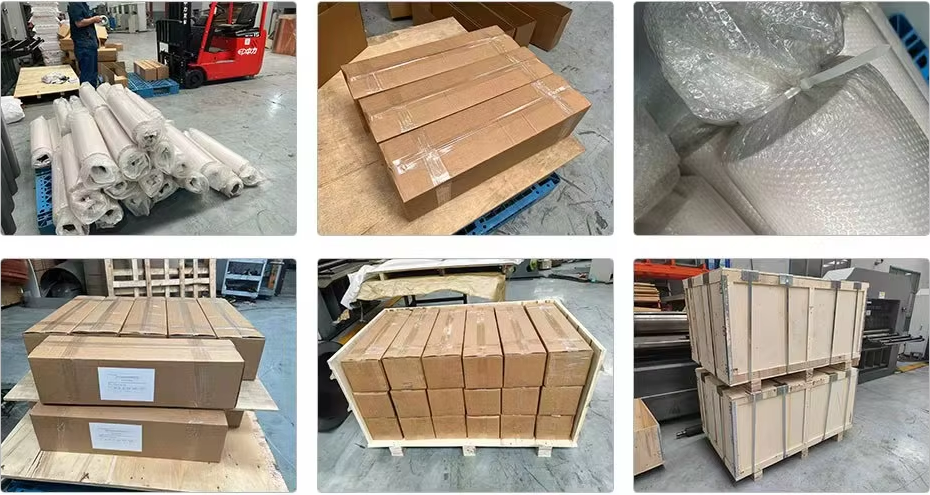
| Packaging | Export-standard packaging or customized packaging |
Final dimensions and performance depend on the selected copper grade, mesh opening, thickness, surface finish, installation method, and operating environment. Please contact us for a product drawing and quotation based on your requirements.
The shielding effectiveness of copper expanded mesh depends on more than the material itself. For reliable EMI and RFI protection, the complete shielding system must be designed correctly.
Important factors include:
The mesh opening should be selected according to the highest frequency that needs to be attenuated. Smaller openings generally provide better shielding at higher frequencies, but they may reduce airflow and increase pressure drop.
Gaps, seams, joints, doors, fasteners, and ventilation openings can reduce the effectiveness of an EMI shielding enclosure. All conductive sections should be properly connected.
Copper expanded mesh must be correctly bonded to the surrounding enclosure or conductive frame. Poor electrical contact, paint layers, oxidation, or loose fasteners may reduce shielding performance.
The final performance may vary depending on whether the mesh is installed as a window, ventilation panel, enclosure lining, gasket component, or laminated shielding layer.
EMI shielding effectiveness should be evaluated over the actual frequency range of the application. Laboratory testing may be required for critical projects.
Temperature, humidity, corrosion, vibration, mechanical stress, and chemical exposure should be considered when selecting copper grade and surface treatment.
For demanding applications, we recommend testing the complete enclosure or assembly rather than evaluating the mesh material alone.
Both expanded copper mesh and woven copper mesh can be used for conductive and EMI shielding applications. The best choice depends on the required performance and installation conditions.
| Feature | Expanded Copper Mesh | Woven Copper Mesh |
|---|---|---|
| Construction | Made from one continuous sheet | Interlaced wires |
| Electrical continuity | Continuous metal structure | Depends on wire contact and construction |
| Mechanical strength | Good structural stability | Flexible and conformable |
| Airflow | Available in various open areas | Available in fine mesh openings |
| Processing | Easy to cut, bend, and form | Easy to cut and shape |
| Typical uses | Panels, vents, enclosures, guards | Gaskets, screens, filters, flexible shielding |
| Material efficiency | Efficient sheet utilization | Wire-based construction |
Our technical team can recommend the most suitable mesh type based on frequency, airflow, flexibility, shielding geometry, and budget.
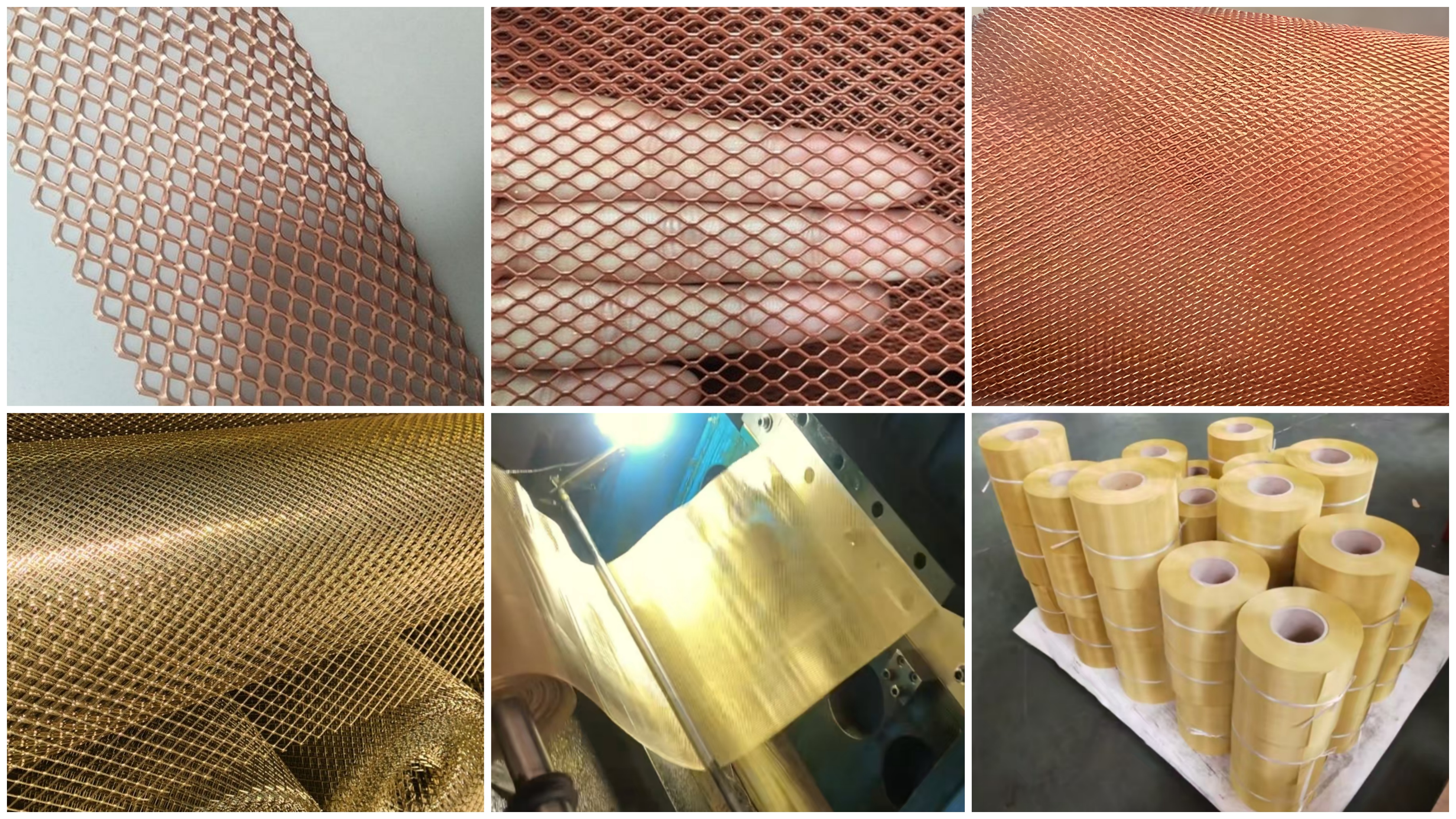
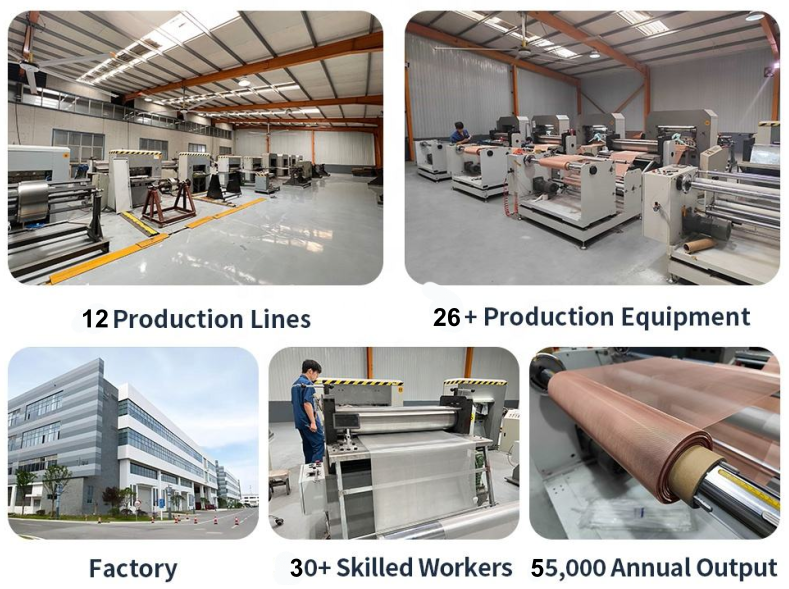
Our copper expanded mesh is manufactured through a controlled production process to ensure consistent mesh geometry and reliable quality.
Copper sheet is inspected for thickness, surface condition, flatness, and material conformity.
The sheet is simultaneously slit and stretched to create the required diamond-shaped openings and continuous strands.
Depending on the required design, the expanded mesh may remain raised or be flattened to obtain a smoother surface and lower profile.
The mesh is cut into standard sheets, rolls, strips, or custom dimensions.
Optional plating or surface treatment can be applied to improve solderability, contact stability, corrosion resistance, or compatibility with other materials.
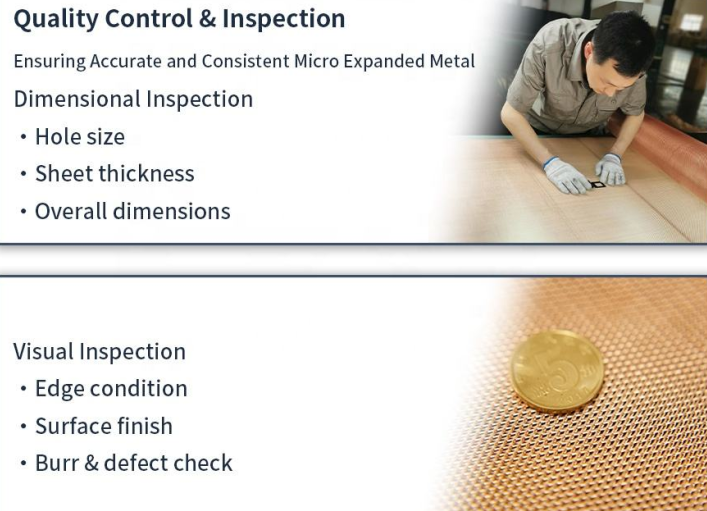
Mesh opening, strand width, thickness, dimensions, surface quality, and electrical continuity are checked before shipment.
The finished product is carefully packed to prevent deformation, moisture damage, oxidation, and surface scratches during storage and transportation.
We understand that EMI shielding components often form part of safety-critical or performance-sensitive equipment. Our quality control procedures may include:
Inspection requirements can be agreed upon before production for customized orders.
Every shielding application has different requirements. We provide customized copper expanded mesh according to drawings, samples, technical specifications, or application descriptions.
Customization may include:
Send us your drawing, mesh size, quantity, operating frequency, airflow requirement, and installation method. Our engineers will help evaluate the design and recommend a suitable configuration.
Before placing an order, consider the following technical requirements:
What frequency range must be shielded?
The required mesh opening is closely related to the highest frequency of concern.
Is airflow required?
Ventilation panels may require a balance between shielding performance and pressure drop.
What are the available installation dimensions?
Provide the required panel length, width, thickness, frame size, and mounting method.
Will the mesh be exposed to moisture or chemicals?
Select an appropriate copper alloy or surface treatment for the operating environment.
Does the mesh need to be flexible or formable?
Thin mesh may be suitable for curved surfaces, while thicker mesh may provide better mechanical strength.
How will the mesh be grounded?
Define the contact area, fastening method, conductive gasket, soldering method, or bonding structure.
Are there specific compliance requirements?
Let us know if your project requires EMC, CE, FCC, MIL-STD, IEC, or other standards testing.
Copper expanded mesh is commonly used for EMI/RFI shielding, shielded ventilation panels, electronic enclosures, grounding and bonding components, conductive screens, and industrial equipment protection.
Yes. Copper expanded mesh provides a continuous conductive structure that can be used for electromagnetic and radio-frequency shielding. Actual shielding effectiveness depends on mesh opening, frequency, installation, grounding, seams, and the overall enclosure design.
Yes. It is often used in EMI-shielded ventilation openings because it allows airflow while maintaining a conductive shielding barrier. The mesh opening and panel design should be selected according to the required frequency range and airflow performance.
Yes. We can customize material, thickness, mesh opening, strand dimensions, sheet size, roll length, surface finish, cutting, forming, plating, and frame assembly.
Copper generally provides higher electrical conductivity than aluminum and is often selected when maximum conductivity or reliable contact performance is important. Aluminum may offer lower weight and good corrosion resistance. The best material depends on the application, environment, cost, and mechanical requirements.
Bare copper is generally suitable for soldering, but solderability depends on material condition, surface cleanliness, thickness, and any applied coating. Plated surfaces may require a compatible soldering process.
For most EMI shielding applications, proper bonding and grounding are required to create an effective conductive path. The specific grounding method depends on the enclosure and system design.
Samples may be available for standard products or custom development. Please provide the required mesh dimensions and application information so we can confirm sample availability.
Please provide:
📧 Email: sales@wiremeshes.net
📞 Phone & Whatsapp: +86-180-5318-6595
🌐 Website: www.wiremeshes.net
📧 Email: sales@wiremeshes.net
📞 Phone & Whatsapp: +86-180-5318-6595
🌐 Website: www.wiremeshes.net







Long Press to Scan QR Code
Scan QR Code
