316L Stainless Steel Expanded Metal Precision Filter Mesh | Micro Mesh for Filtration & Battery Electrodes

+86-18053186595
+86-18053186595
HEBEI RONGCHANG WIRE MESH PRODUCT CO., LTD.
/
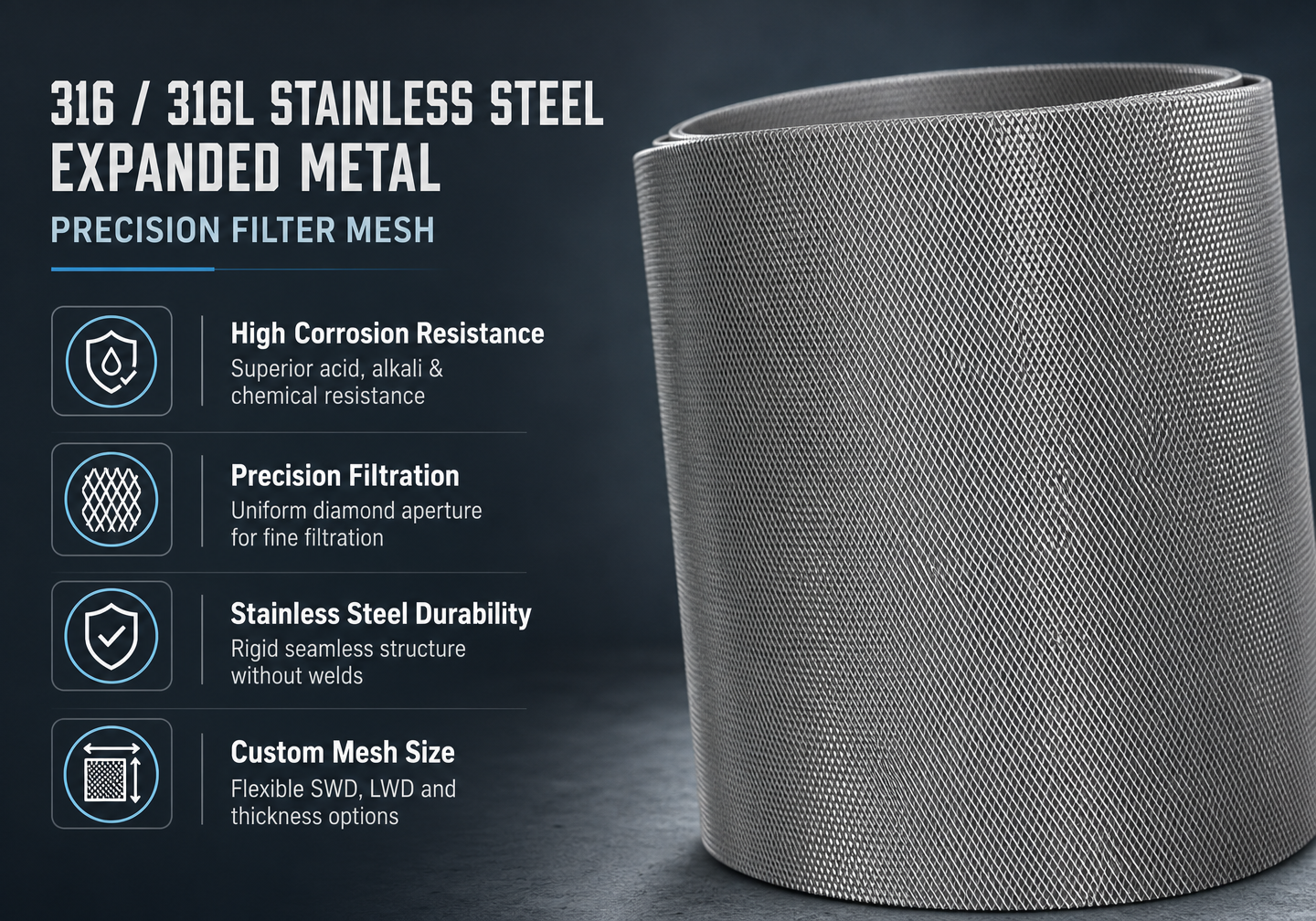
SUS 316 316L Expanded Metal Precision Filter Mesh
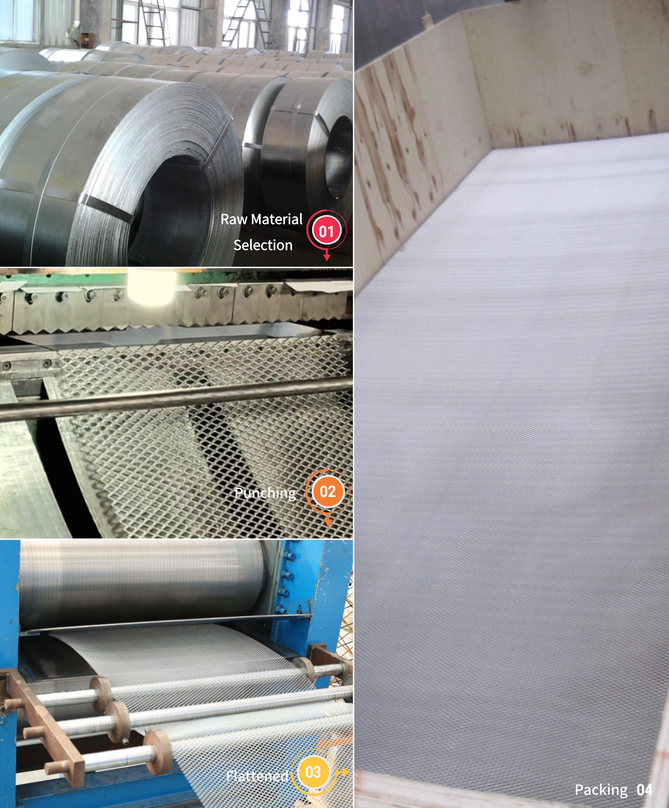
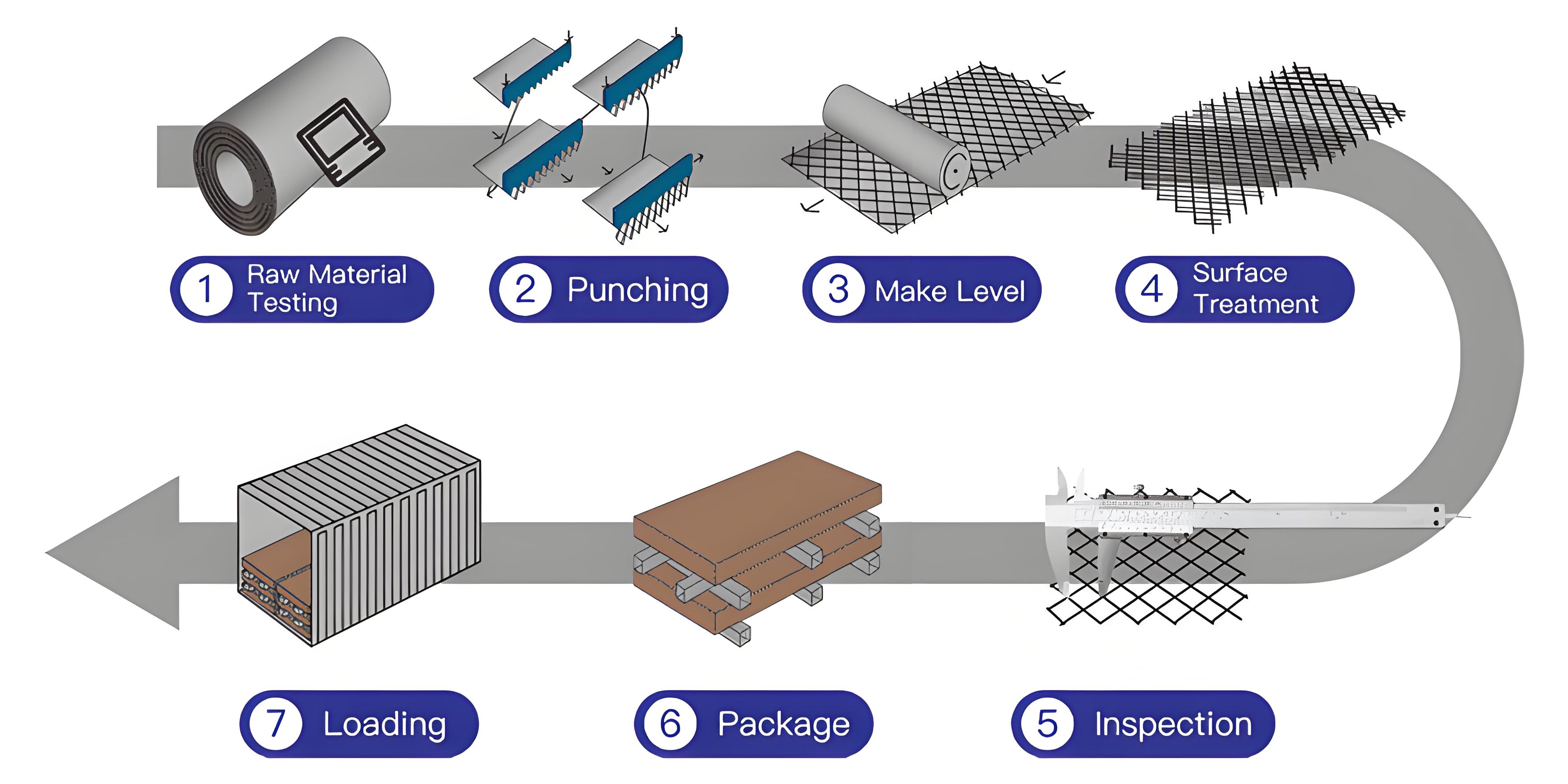
Expanded Metal Production Process:

Surface treatment: PVC coated, Teflon spraying, hot-dipped galvanized, electro galvanized, anodized, polished.

Customized service:

Customized Sizes, Colors, design, material, etc: Customized based on customer demand, expanded metal mesh can also be customized to meet specific project needs.

Application: 

Precision filter screens, filter element frames, and vibrating screens used in the petrochemical, food processing, and pharmaceutical industries.

316 / 316L Stainless Steel Expanded Metal Precision Filter Mesh | Micro Mesh for Filtration, Battery & Chemical Applications

SUS 316 and 316L precision expanded metal mesh manufactured with micro-scale apertures for high-performance filtration, battery electrode support, and corrosive environment applications. Available in diamond, hexagonal, and custom patterns with PTFE coating, electropolishing, and passivation surface treatments.

What Is 316 / 316L Expanded Metal Precision Filter Mesh?

316 / 316L stainless steel expanded metal precision filter mesh is a rigid, one-piece metal mesh manufactured through a precision slitting and cold-forming process. Unlike woven wire mesh — which consists of interlaced wires that can fray, shift, or create particle traps at crossover points — expanded metal is produced from a solid sheet of austenitic stainless steel that is simultaneously slit and stretched to create a uniform pattern of diamond, hexagonal, or custom-shaped openings.

The result is a continuous, integral mesh structure with no welds, no joints, and no weak points. Every strand acts as both a structural member and a filtration surface, delivering exceptional mechanical strength, precise aperture control, and excellent flow characteristics. This makes it the material of choice for applications where particle retention, structural integrity, and chemical resistance must coexist in a single component.

Our precision filter mesh is manufactured from SUS 316 (UNS S31600) and SUS 316L (UNS S31603) austenitic stainless steel grades, selected specifically for their superior resistance to chlorides, acids, and high-temperature oxidation compared to standard 304-grade alternatives. The "L" designation in 316L indicates reduced carbon content (maximum 0.03%), which virtually eliminates the risk of intergranular corrosion in welded or heat-affected zones — a critical consideration for filter elements and battery grid plates that must maintain performance after fabrication.
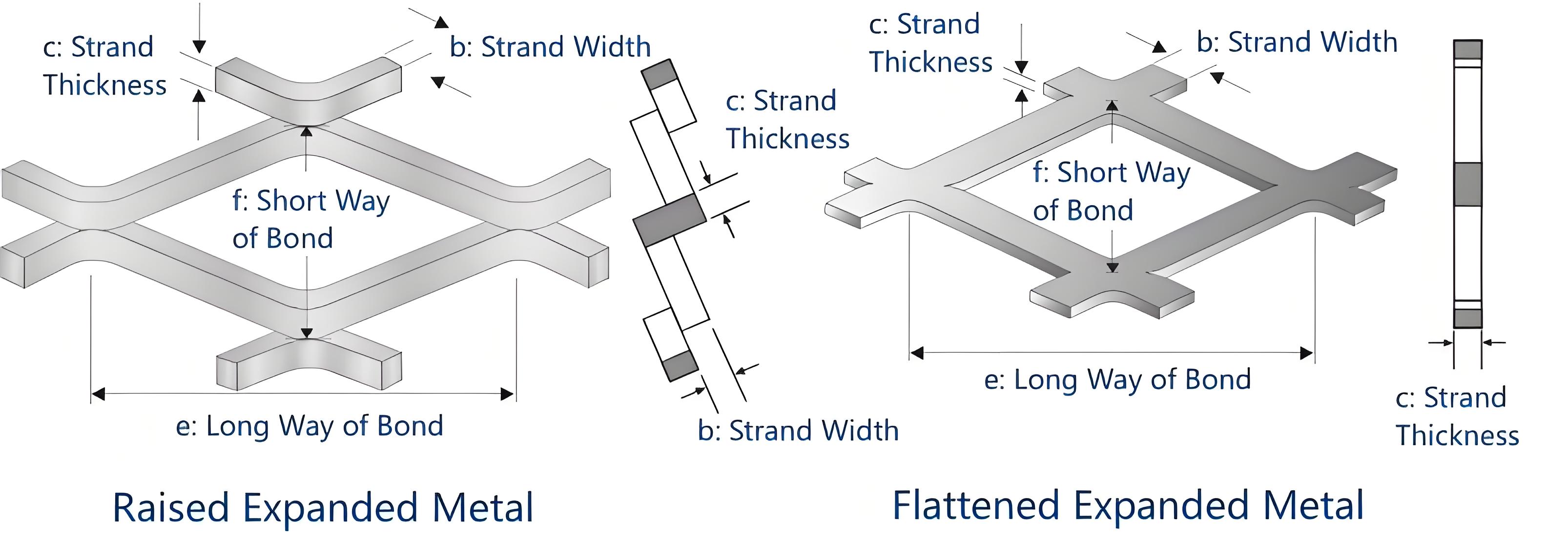
Comparison Between Raised and Flattend Expanded Metal
expanded-metal-mesh-production-process
Products List
SUS-316-316L-expanded-metal-precision-filter-mesh
expanded-metal-mesh-drawing
Micro Expanded Metal Mesh Description:

Specifications

length

(m)

weight
 (kg/m2)

weight
 (kg/m2)

mesh 

thickness(mm)

distance

short(mm)

distance

long(mm)

strip(mm)

0.5

2.5

4.5

0.5

0.5

1

1.8

0.5

10

25

0.5

0.6

2

0.73

0.6

10

25

1

0.6

2

1

0.8

10

25

1

0.6

2

1.25

1

10

25

1.1

0.6

2

1.77

1

15

40

1.5

2

4

1.85

1.2

10

25

1.1

2

4

2.21

1.2

15

40

1.5

2

4

2.3

1.5

15

40

1.5

1.8

4

2.77

1.5

23

60

2.6

2

3.6

2.77

2

18

50

2.1

2

4

3.69

2

22

60

2.6

2

4

3.69

3

40

80

3.8

2

4

5.00

4

50

100

4

2

2

11.15

4.5

50

100

5

2

2.7

11.15

5

50

100

5

1.4

2.6

12.39

6

50

100

6

2

2.5

17.35

8

50

100

8

2

2.1

28.26

Material Grades: 316 vs. 316L Stainless Steel:

Property

SUS 316

SUS 316L

UNS Number

S31600

S31603

Carbon Content (max)

0.08%

0.03%

Chromium Content

16.0–18.0%

16.0–18.0%

Nickel Content

10.0–14.0%

10.0–14.0%

Molybdenum Content

2.0–3.0%

2.0–3.0%

Intergranular Corrosion Resistance

Good

Excellent

Post-Weld Performance

May require heat treatment

No sensitization risk

Typical Applications

General filtration, architectural

Welded filters, battery grids, pharmaceutical

Understanding the distinction between 316 and 316L is essential for specifying the correct material for your filtration or electrochemical application.
Expanded Metal vs. Perforated Metal vs. Woven Wire Mesh:
Engineers and procurement professionals often face a material selection decision between three competing mesh technologies. The following comparison clarifies when 316 / 316L expanded metal is the optimal choice:
Manufacturing Process: How Precision Expanded Metal Is Made
Raw Material Testing → Punching → Make Level → Surface
Treatment → Inspection → Package → Loading

When to Specify 316

Choose standard SUS 316 for applications where the mesh will not be subjected to welding or prolonged exposure to temperatures between 450°C and 850°C (the sensitization range). It offers identical mechanical strength and general corrosion resistance to 316L at a marginally lower material cost.

When to Specify 316L

Specify SUS 316L for:
1.  Welded filter element supports where the mesh is spot-welded, seam-welded, or brazed to frames
2.  Battery grid plates where the mesh is coated with active material and must resist electrolyte attack at cut edges
3.  Pharmaceutical and food-grade filtration where any carbon precipitation could compromise product purity
4.  Marine and coastal applications where chloride-induced pitting is a primary concern
Both grades contain 2–3% molybdenum, which provides the defining performance advantage over 304-grade stainless steel: resistance to pitting and crevice corrosion in chloride-containing environments, including seawater, brine solutions, and chemical process streams.
expanded-metal-mesh-product-process

Frequently Asked Questions (FAQ)

What is the difference between 316 and 316L expanded metal mesh?

316 contains up to 0.08% carbon, while 316L is limited to 0.03% maximum carbon. This lower carbon content in 316L prevents chromium carbide precipitation during welding or heat treatment, eliminating intergranular corrosion risk. For welded filter supports and battery grids, 316L is strongly recommended. For non-welded general filtration, 316 is acceptable and slightly more economical.

What is micro expanded metal mesh?

Micro expanded metal refers to mesh with SWD (Short Way Dimension) below 2.0 mm, typically ranging from 0.5 mm to 1.5 mm. It is manufactured using precision tooling on thin-gauge stainless steel (0.1 mm – 0.5 mm thickness) and is used for high-efficiency filtration, battery electrodes, and fine screening applications where standard expanded metal apertures are too large.

Can expanded metal mesh be used for battery electrodes?

Yes. 316L expanded metal is widely used as the current collector grid in lead-acid, NiMH, and experimental battery chemistries. The integral strand structure provides excellent electrical conductivity and mechanical support for active material paste. Electropolished or passivated surfaces improve adhesion and corrosion resistance in electrolyte environments.

What surface treatments are available for 316 expanded metal?

For 316 / 316L expanded metal, we offer passivation (restores passive layer), electropolishing (mirror finish, Ra < 0.4 μm), and PTFE (Teflon) spraying (chemical inertness, non-stick). Hot-dip galvanizing and electro-galvanizing are generally unnecessary for 316/316L due to inherent corrosion resistance but are available for carbon steel variants.

What is the maximum open area available?

Depending on the pattern and strand width, 316 / 316L expanded metal can achieve open areas from 30% to 80%. For filtration support applications, we typically recommend 45–65% open area to balance flow capacity with structural rigidity. Higher open areas (up to 80%) are available for lightweight applications such as speaker grilles and air diffusers.

Do you provide material certificates?

Yes. Every order is accompanied by a Mill Test Report (MTR) documenting chemical composition, mechanical properties (tensile strength, yield strength, elongation), and compliance with ASTM A240 or EN 10088-2 standards. Third-party SGS or TÜV inspection can be arranged upon request.

What is the minimum order quantity (MOQ)?

Our standard MOQ is 50 sheets or 500 linear meters in roll form. For trial orders and prototype development, we offer sample kits containing A4-size swatches in various SWD/LWD configurations. Contact our technical sales team to request a complimentary sample pack.
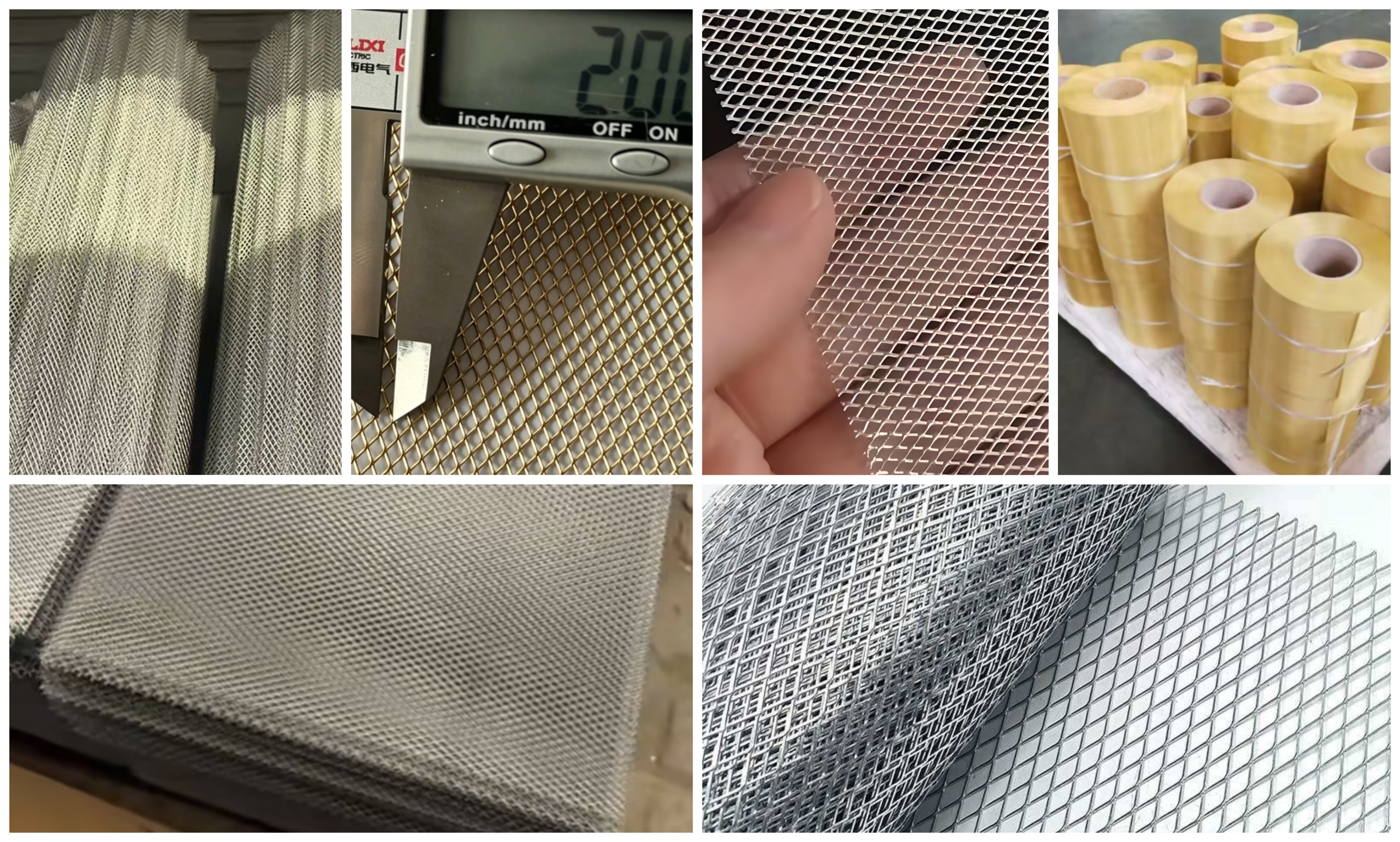
Micro Expanded Metal Mesh Products:
micro-hole-expanded-metal-mesh


Feature

Expanded Metal

Perforated Metal

Woven Wire Mesh

Material Utilization

~100% (no waste)

60–80% (punched discs removed)

~100% (wire drawing)

Structural Integrity

Monolithic, no weak points

Solid sheet with holes

Crossover points prone to wear

Aperture Tolerance

±0.1 mm (precision range)

±0.05 mm

±5% (wire diameter dependent)

Filtration Rating

Down to ~0.5 mm SWD

Down to ~0.5 mm

Down to ~20 μm (fine wire)

Pressure Drop

Moderate (40–70% open area)

Moderate to high

Low to moderate

Cost (316/316L)

Low to moderate

Moderate to high

High (labor-intensive weaving)

Best For

Support layers, electrodes, structural filters

Precision sieving, decorative

Fine filtration, flexible screens


Related Products
Explore our complete range of expanded metal products:
Ready to Get Your Custom Expanded Metal Precision Filter Mesh?
Send us your specifications, drawings, or application requirements in the botton table or call us with the floating button on the right. Our engineering team will respond with a detailed quotation within 24 hours.
QUICK LINKS
CONTACT US
No.169, Yuhua East Road, Yuhua District, Shijiazhuang City, China
FOLLOW US ON
+86-18053186595
+86-18053186595
HEBEI RONGCHANG
WIRE MESH PRODUCT CO., LTD.
Powerby Feedback Follow Data